DPRK Missile Programme
Ballistic Missile Launch (April 19, 2026)
Summary
According to Japan Ministry of Defense, on April 19, 2026, around 6:00 AM, DPRK launched multiple ballistic missiles from the vicinity of its eastern coast. While specific details are currently undergoing rigorous analysis through close cooperation between Japan, the US, and the Republic of Korea, it is estimated that the missiles fell near the eastern coast of the Korean Peninsula. To date, there has been no confirmation of any projectiles entering Japanese territory or its Exclusive Economic Zone (EEZ).
Time of Incident: Approximately 06:00 JST.
Launch Location: Near the eastern coast of the DPRK.
Projectile Type: Multiple ballistic missiles.
Impact Zone: Estimated to have fallen within the waters off the eastern coast of the Korean Peninsula.
Rodong Sinmun reported on April 20 that on April 19, 2026, the DPRK Missile General Bureau conducted a test launch of the upgraded 화성포-11라 (Hwasongpho-11Ra) surface-to-surface tactical ballistic missile. The primary objective was to evaluate the combat power and effectiveness of newly developed warheads—specifically submunition (cluster) and fragmentation-mine types. Presided over by Kim Jong Un, the test involved the simultaneous launch of five missiles at a designated island target 136 km away. The high-density strike successfully covered an area of 12.5 to 13 hectares, signaling a significant enhancement in the DPRK's ability to suppress specific target zones with precision and high-volume firepower.
Key Points
- Weapon System: Upgraded Hwasongpho-11Ra tactical ballistic missile (5 missiles ).
- Warhead Technology: Validation of "dispersion" (submunition) and "fragmentation-mine" warheads designed for area-denial and high-density suppression.
- Distance: Target island (Al Som 알섬) set at the 136 km mark.
- Impact Area: High-density strikes covered an area of 12.5 to 13 hectares (Al Som 알섬)
- Leadership Presence: Kim Jong Un personally guided the test, accompanied by high-ranking officials including Kim Jong Sik and General Jang Chang Ha, as well as the commanders of the 1st, 2nd, 4th, and 5th KPA Corps.
- Strategic Significance: Kim Jong Un emphasized that the five-year development cycle for these warheads has successfully met the military's operational requirements for both high-precision and high-density suppression capabilities.
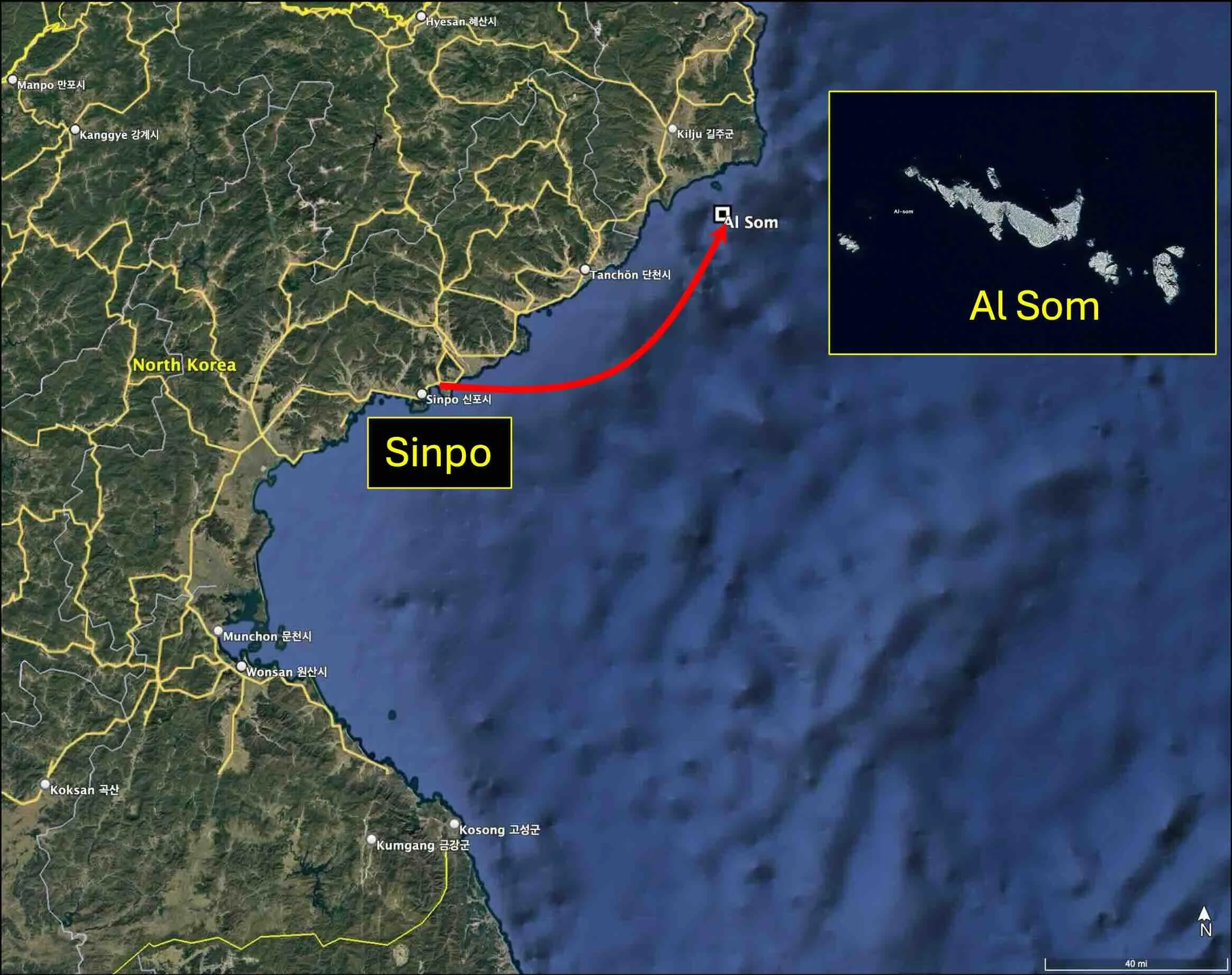
Source: Google Earth Pro (annotated by DPRK Monitor)
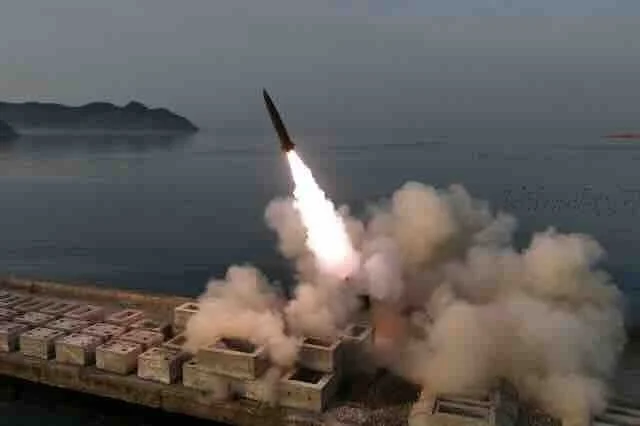
Hwasongpho-11 Ra (화성포-11라)
Source: Rodong Sinmun
Ballistic Missile Launch (April 8, 2026)
Summary
According to Japan Ministry of Defense, on April 10, 2026, North Korea conducted a missile test from its eastern coast, launching at least one ballistic missile toward the East. The projectile followed an irregular trajectory, reaching a peak altitude of approximately 60km and traveling over 700km before falling into the Sea of Japan (the East Sea), outside Japan's Exclusive Economic Zone (EEZ). While authorities have confirmed at least one launch, Japanese, U.S., and South Korean intelligence agencies are maintaining close coordination to determine if additional projectiles were involved and to analyze the specific technical nature of the flight.
Launch Time: Approximately 14:23 JST.
Launch Location: Vicinity of the North Korea’s eastern coast.
Flight Distance: Exceeded 700km.
Maximum Altitude: Approximately 60km.
Korean Central News Agency (KCNA) reported on April 9, 2026, that from April 6 to 8, 2026, the DPRK’s Academy of Defence Science and Missile Administration conducted a series of multi-domain weapons tests aimed at diversifying their strike and defense capabilities. The trials focused on non-kinetic "special assets," such as electromagnetic weapons and carbon fiber (blackout) bombs, alongside conventional kinetic upgrades. A primary objective was the performance evaluation of the Hwasongpho-11 Ka (화성포-11가) tactical ballistic missile equipped with a high-density cluster warhead, intended for large-scale area denial. These tests, overseen by General Kim Jong Sik (김정식대장), represent a push toward integrating electronic warfare with modernized tactical missile systems.
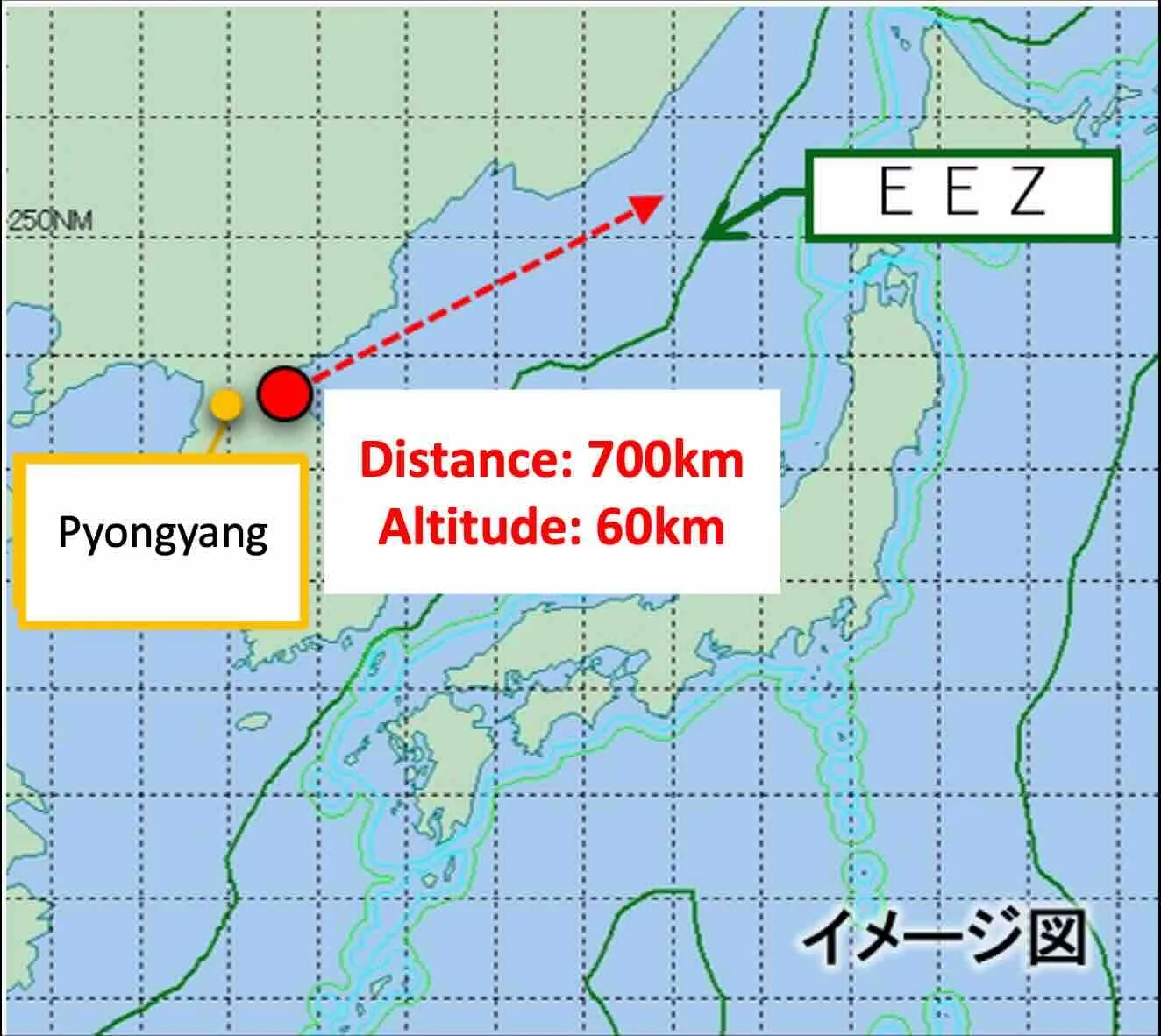
Source: MOD (annotated by DPRK Monitor)
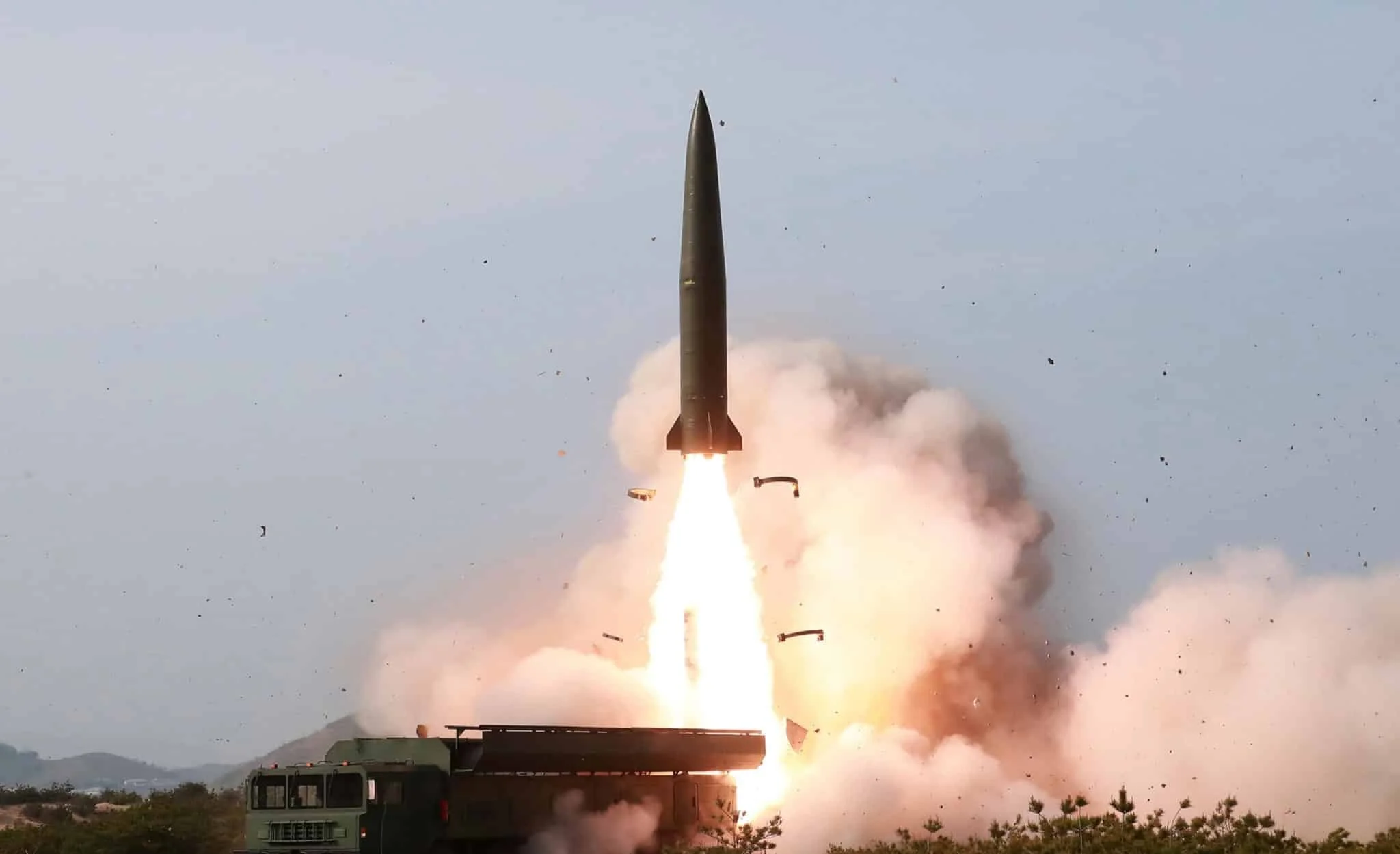
Hwasongpho-11 Ka (화성포-11가) KN-23
Source: CSIS
Ballistic Missile Launch (March 14, 2026)
Summary
According to Japan Ministry of Defense, On the afternoon of March 14, 2026, North Korea conducted a provocative military action by launching multiple ballistic missiles from its western coast. The missiles traveled in a northeasterly direction, reaching a peak altitude of approximately 80 km and covering a flight distance of roughly 340 km. Initial assessments indicate that the projectiles landed in the waters off the eastern coast of the Korean Peninsula, outside of Japan's Exclusive Economic Zone (EEZ).
According to a KCNA article on March 15, Kim Jong Un personally supervised a firepower strike drill conducted by a long-range artillery sub-unit in the western area of the DPRK on March 14. The exercise involved the simultaneous launch of twelve 600mm-caliber ultra-precision multiple rocket launchers. These rockets successfully traversed the peninsula to strike an island target in the East Sea, located approximately 364.4 km from the launch site (the Sunan area). Kim Jong Un emphasized that the systems possess a striking range of 420 km, placing hostile forces within reach of the DPRK’s tactical nuclear delivery platforms.
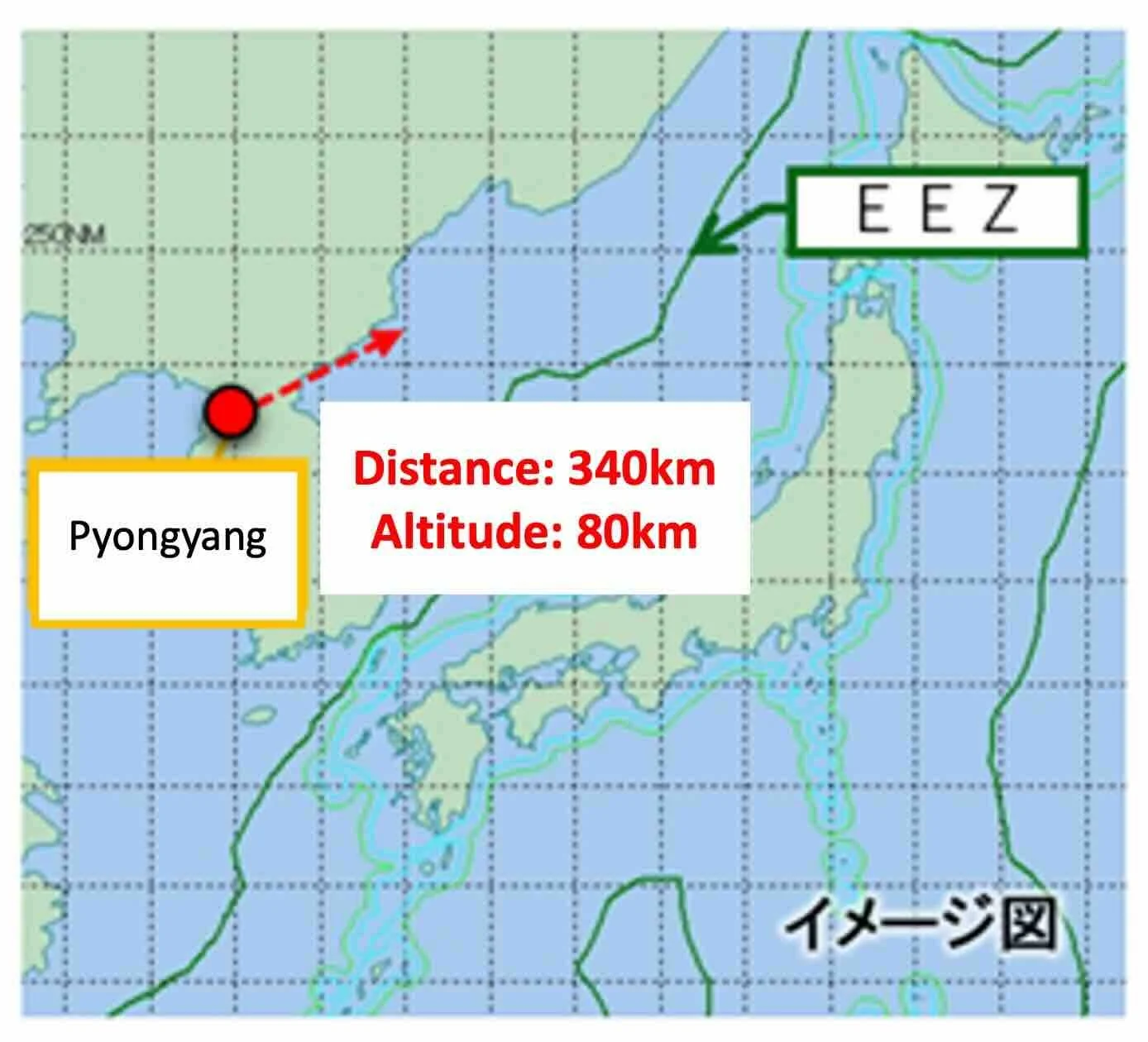
Source: MOD (annotated by DPRK Monitor)
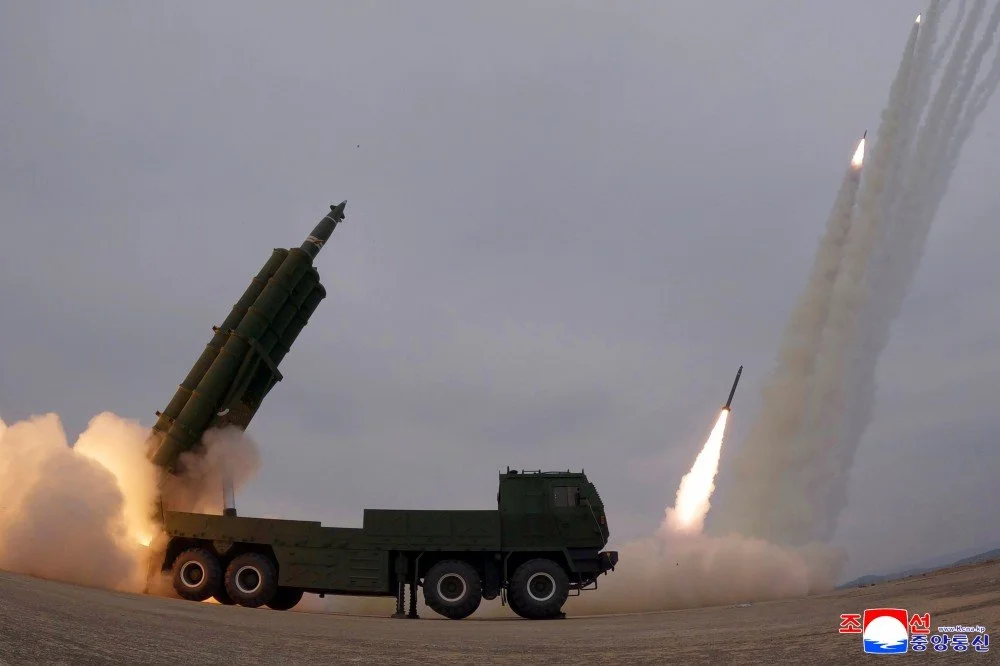
600mm-caliber ultra-precision multiple rocket launchers (KN-25)
Source: KCNA
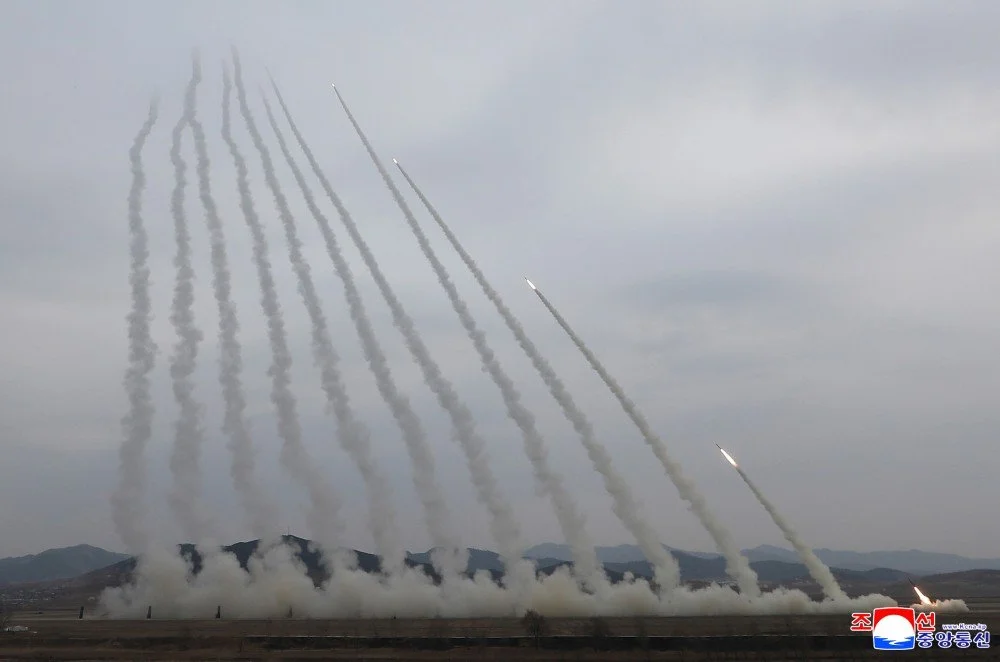
Source: KCNA
Ballistic Missile Launch (January 27, 2026)
Summary
Acoording to Japan Ministry of Defense, North Korea launched two ballistic missiles from its western coast toward the east this afternoon. While a detailed joint analysis by Japan, the United States, and the Republic of Korea is currently underway, preliminary data indicates the missiles landed near North Korea's eastern coast. Crucially, both projectiles are estimated to have fallen outside of Japan’s Exclusive Economic Zone (EEZ).
Launch Event 1: at approximately 15:54
- Peak Altitude: ~80 km
- Flight Distance: ~350 km
Launch Event 2: at approximately 16:02
- Peak Altitude: ~70 km
- Flight Distance: ~340 km
- Launch Vector: From the western coast of the DPRK toward the east (cross-peninsular trajectory).
NK News reported, the Republic of Korea's Joint Chiefs of Staff (JCS) said the DPRK launched “multiple short-range ballistic missiles” toward the sea from the northern part of Pyongyang around 3:50 p.m. KST.The ROK military said the North Korean missiles flew about 217 miles (350 km), adding that it is closely sharing information with the U.S. and Japan and strengthening surveillance and vigilance in preparation for further launches.
The following is a summary of the Korean Central News Agency (KCNA) article dated January 28, 2026.
Missile Launch Details
- Missile Name: A "large-caliber multiple rocket launcher system upgraded with new technology"(KCNA images show the missiles are KN-25).
- Date: January 27.
- Launch Location: Not specified in the provided sources (NK News, Colin Zwirko's SNS shows the location: 39°23'39.31"N, 125°40'38.19"E).
- Number Fired: Four rockets.
- Flight Distance: 358.5 km.
- Target: A target in the waters (KCNA images show the taget was Al-Som).
Purpose and Achievements
- Purpose: The test-fire was conducted to verify the effectiveness of the newly upgraded large-caliber multiple rocket launcher system. It was aimed at further raising the level of the country's strategic deterrent against a nuclear war.
- Achievements: The test successfully validated the technical upgrades of the weapon system, making it suitable for specific attacks. It achieved improvements across all indexes, maximizing its strike capability, mobility, intelligence, and hitting accuracy. Furthermore, it proved the superiority of its "self-steered precisely guided flight system," which is designed to function without being affected by outside intervention.
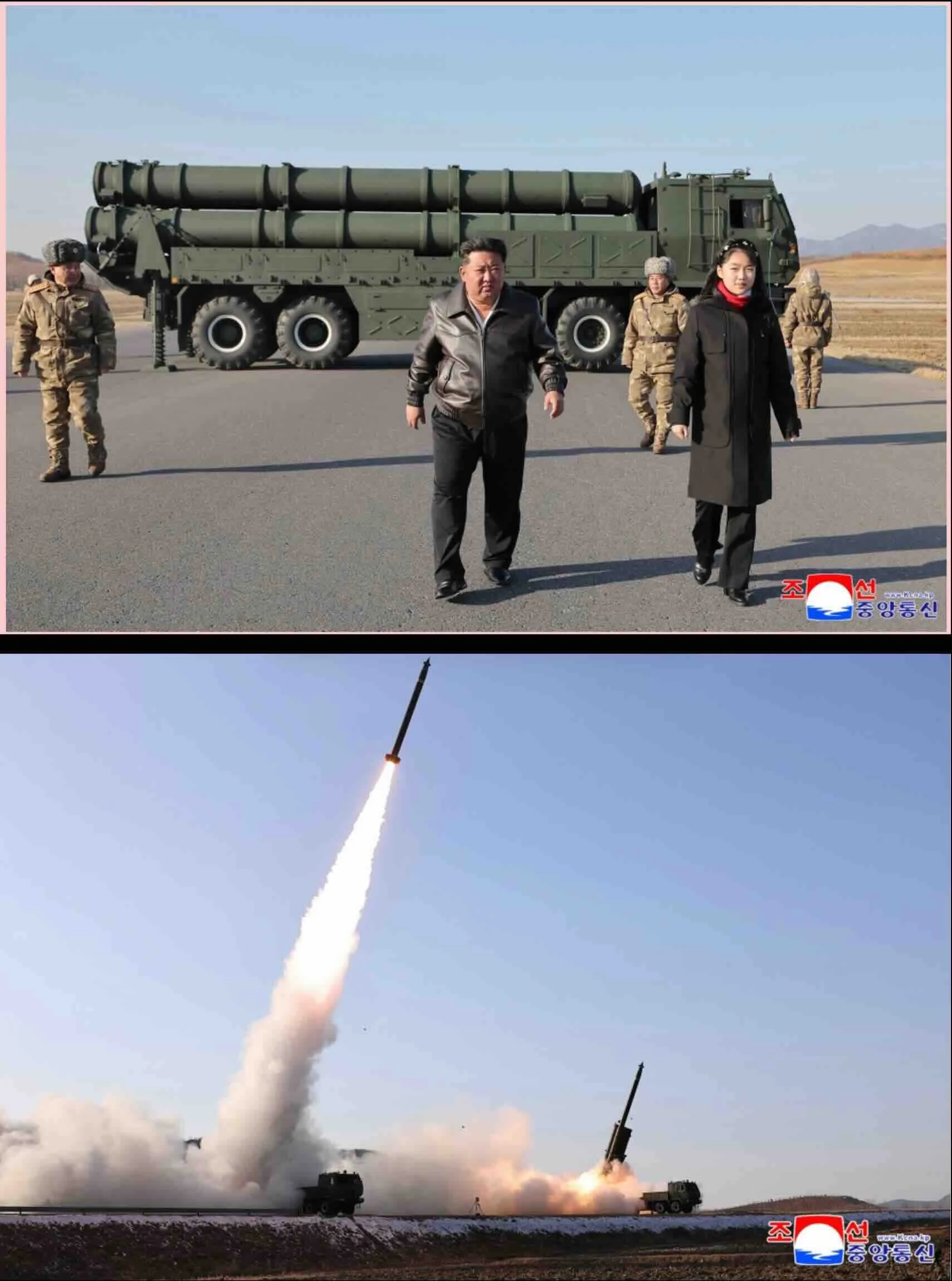
KN-25
Source: KCNA
Source: Google Earth Pro (annotated by DPRK Monitor)
Ballistic Missile Launch (January 4, 2026)
Summary
According to Japan Ministry of Defense, North Korea launched at least two ballistic missiles eastward from the vicinity of its western coast between the 7:00 and 8:00 a.m. timeframe today. Detailed analysis is currently underway in close coordination among Japan, the United States, and the Republic of Korea. At this stage, the missiles are assessed to have fallen outside Japan's Exclusive Economic Zone (EEZ) in the Sea of Japan (the East Sea). There is also a possibility that both missiles flew on irregular trajectories; analysis is ongoing.
Launch Event 1: at approximately 07:54
- Reached a maximum altitude of around 50 km and traveled approximately 900 km.
Launch Event 2: at approximately 08:05**
- Reached a maximum altitude of around 50 km and traveled approximately 950 km.