
The DPRK appeared to have begun providing military support to Russia by railway in November 2022. The DPRK Panel of Experts (the Panel) of the Security Council mentioned Pyongyang’s initial assistance to Moscow in the Ukraine war in its report, using satellite imagery analysis (see the Panel’s report, para. 123, annex 68).
Since then, the DPRK has accelerated its involvement in the war, supporting Russia’s invasion of Ukraine. A report by the Multilateral Sanctions Monitoring Team (MSMT), which was established to succeed the disbanded Panel following its sudden dissolution in April 2024, showed that the DPRK has transferred over 20,000 containers of munitions to support Russia’s invasion of Ukraine since September 2023. Approximately 9 million rounds of ammunition were reportedly transferred from the DPRK to Russia in 40 shipments between January and December 2024.
The DPRK Monitor has observed evidence of debris from North Korea’s weapons systems on the ground.
DPRK Forces Deployed to Russia
In October 2024, ROK’s National Intelligence Service (NIS) reported that between early and mid‑September 2024, North Korean troops were sent by Russian naval vessels from North Korean ports to Russia’s Far East. These troops underwent training at military garrisons in Siberian regions (Ussuriysk, Khabarovsk, and Blagoveshchensk). On October 23, White House National Security Communications Adviser John Kirby stated at a press briefing that at least 3,000 North Korean soldiers had been moved to eastern Russia between early and mid‑October and were receiving training at Russian bases. He noted that they could potentially be deployed to the front in Ukraine.
Engagements Between DPRK Soldiers and Ukrainian Forces
In early November 2024, following comments on social media by Ukrainian army–affiliated source (Kovalenko) concerning engagements between DPRK soldiers and Ukrainian forces, Ukraine’s Defense Minister Umerov and President Zelenskyy confirmed that there have been casualties among North Korean troops (DPRK Monitor notes that Kovalenko had already mentioned in early October 2024 in his SNS that North Korean soldiers had died). It is estimated that the DPRK deployed over 11,000 troops in late 2024, and the DPRK publicly acknowledged this deployment in late April 2025.
In early January 2025, Ukraine’s military intelligence announced the capture of North Korean soldiers as prisoners of war. Among the dead, Ukrainian forces recovered personal documents, diaries, weapons, and communication devices—apparently intended to conceal their North Korean identity and disguise as Russians. They also found documents believed to carry messages from Kim Jong Un, along with notes on countering drone attacks.
-
SNS, Blogs
<Telegram> 2025-6-17, Kovaleko (KN-23)
<Telegram> 2025-4-24, Special Operation Forces (DPRK platoon in close combat)
<Telegram> 2025-4-16, Kovalenko (KN-23)
<Telegram> 2025-4-16, Kovalenko (Russia imports DPRK labors)
<Telegram> 2025-4-15, Kovalenko (Ammunition)
<Telegram> 2025-1-27, Special Operation Forces (Seized DPRK troops equipments)
<Telegram> 2025-1-25, Kovalenko (M-1978 Koksan)
<X> 2025-1-11, Volodymyr Zelenskyy (Two DPRK soldiers captured in the Kursk Region), https://x.com/ZelenskyyUa/status/1878046090018042169
<Telegram> 2025-1-8, Special Operation Forces (DPRK soldiers captured in the Kursk Region)
<Telegram> 2025-1-8, Special Operation Forces (DPRK soldier’s memo)
<Telegram> 2025-1-7, Special Operation Forces (DPRK 13 soldiers were killed)
<Telegram> 2025-1-3, Kovalenko (Soldiers’ notebook)
<HP, Ukraine Defense Intelligence> 2025-1-2 (Russians continued to involve units of the DPRK army in conducting hostilities in the Kursk region)
<Telegram> 2024-12-28, Special Operation Forces (Soldier’s memo)
<Telegram> 2024-12-26, Special Operation Forces (Soldier’s memo, How to eliminate a drone)
<Telegram> 2024-12-23, Kovalenko (Soldiers’s death)
<X> 2024-12-23, Volodymyr Zelenskyy (More than 3000 DPRK soldiers were killed and wounded), https://x.com/ZelenskyyUa/status/1871216838585016699
<Telegram> 2024-12-22, Armed Forces of Ukraine (Disguised ID of DPRK soldiers)
<Facebook> 2024-12-20, Air Force Command of UA Armed Forces (KN-23 attacks against Kyiv)
<Telegram> 2024-12-17, Kovalenko (Soldiers wounded)
<Telegram> 2024-12-17, Kovalenko (Reactions to drones)
<Facebook> 2024-12-17, Ukraine Defense Intelligence (DPRK deployed surveillance posts of drones)
<Telegram> 2024-12-16, Kovalenko (Drone footage)
<Telegram> 2024-12-15, Kovalenko (Drone footage)
<Telegram> 2024-12-14, Kovalenko (Dressed in Russian uniforms)
<Telegram> 2024-11-29, Kovalenko (KN-23, Artillery)
<Facebook> 2024-11-26, Ukraine Defense Intelligence (Foreign components from KN-23/KN-24)
Reference materials, War Sanctions webpage, https://war-sanctions.gur.gov.ua/en/components
<Telegram> 2024-11-24, Kovalenko (KN-23)
<Telegram> 2024-11-24, Kovalenko (Disguised as Russians)
<Telegram> 2024-11-23, Kovalenko (Oil transfer)
<Telegram> 2024-11-22, Kovalenko (Transfer of soldiers)
<Telegram> 2024-11-20, Kovalenko (13th GRAU stored KN-23)
<Telegram> 2024-11-19, Kovalenko (67th GRSU stored DPRK munitions)
<Telegram> 2024-11-16, Kovalenko (“DPRK don’t believe God”)
<Telegram> 2024-11-15, Kovalenko (UAV)
<Telegram> 2024-11-13, Kovalenko KN-23)
<Facebook> 2024-11-10, Ukraine Defense Intelligence (Intercepted DPRK troops radio)
<Telegram> 2024-11-8, Kovalenko (DPRK soldiers in Kursk)
<Telegram> 2024-11-7, Kovalenko (DPRK soldiers in Kursk)
<Telegram> 2024-11-5, Kovalenko (DPRK soldiers, Drone training)
<Telegram> 2024-11-4, Kovalenko (The first DPRK troops under fire )
<Facebook> 2024-11-2, Ukraine Defense Intelligence (More than 7000 DPRK soldiers moved from Primorsky Krai to areas near Ukraine)
<Telegram> 2024-10-31, Kovalenko (3000 DPRK soldiers in Kursk Region)
<Facebook> 2024-10-27, Ukraine Defense Intelligence (Transporting DPRK mercenaries to the front in trucks with civilian plates)
<Facebook> 2024-10-24, Ukraine Defense Intelligence (The first DPRK troops arrived in the combat zone)
<Telegram> 2024-10-23, Kovalenko (DPRK troops arrival in Primorsky Krai)
<Telegram> 2024-10-15, Kovalenko (Less 1% DPRK officers speak Russian)
<Telegram> 2024-10-15, Kovalenko (DPRK troops may be in Kursk Region)
<Telegram> 2024-10-14, Kovalenko (Fiction of 100,000 units preparation)
<Telegram> 2024-10-9, Kovalenko (DPRK ammo stored at 67 GRAU)
<Telegram> 2024-10-8, Kovalenko (DPRK engineers were deployed)
<Telegram> 2024-9-29, Kovalenko (Attempt to blow up railway)
<Telegram> 2024-9-3, Kovalenko (DPRK ballistic missile)
<Telegram> 2024-8-6, Kovalenko (DPRK ballistic missile)
<Telegram> 2024-8-2, Kovalenko (DPRK mortars delivery)
Think tank
<CAR> October 2025, Modified North Korean submunition used in FPV UAV in Ukraine
<Open Source Centre> 2025-4-15, Brothers in Arms: Estimating North Korean Munitions Deliveries to Russia
<Open Source Centre> 2025-2-18, Red Passage: Russian-DPRK Munition Carrier Seeks to Transit the Suez
<Open Source Centre> 2024-11-22, Refined Tastes: Russian Oil Deliveries to Pyongyang Breach the Million Barrel Mark
<Conflict Armament Research> 2024 September, North Korean missiles produced in 2024 used in Ukraine
<Conflict Armament Research> 2024 February, North Korean missile relies on recent electronic components
<Conflict Armament Research> 2024 January, Documenting a North Korean missile in Ukraine
Media
<경향순문> 2026-1-20, 러시아·우크라이나 전쟁 북한군 파병1년, 북한 미사일이 달라졌다···“집 전체가 통채로 솟구치는 느낌”.
<경향순문> 2026-1-20, 러시아·우크라이나 전쟁 북한군 파병1년, “자폭? 별수가 없지 않나…막다른 골목의 선택”.
<경향순문> 2026-1-20, 러시아·우크라이나 전쟁 북한군 파병1년, “파병 북한군, 돌아가면 100만 대군 훈련시키는 ‘교관자원’될 것”.
<경향순문> 2026-1-20, 러시아·우크라이나 전쟁 북한군 파병1년, “1.8km기어와 50m앞에서 기습…그들은 ‘터미네이터’같았다”.
<日テレNews> 2024-11-15,【独自】北朝鮮製ドローン兵器のキーマン カンボジアに“外交官”として潜伏 偽名は「Douglas」
<MBC> 2025-06-26, 국회 정보위원회 백브리핑 (Background briefing by the National Assembly Intelligence Committee of the ROK).
<Комсомольская Правда>2025-06-17,Шойгу сообщил, что КНДР направит 5000 строителей на восстановление Курской области (Shoigu stated that the DPRK will send 5,000 construction workers to help with the reconstruction of the Kursk region.)
<ТАСС> 2025-6-17, КНДР направит 5 тыс. строителей на восстановление Курской области (The DPRK will send 5,000 construction workers to help with the reconstruction of the Kursk region.)
<Yonhap News Agency> 2024-10-29, [속보] 국정원 北폭풍군단 파병으로 알려져…입대연령 낮아 (National Intelligence Service Known to Deploy North Korean Storm Corps)
Governments
<Multilateral Sanctions Monitoring Team> 2025-5-29, Unlawful Military Cooperation including Arms Transfers between North Korea and Russia
<Republic of Korea, National Intelligence Service> 2024-10-18, 국정원, 북한 특수부대 러-우크라 전쟁 참전 확인 (NIS confirms participation of North Korean special forces in Russia-Ukraine war)
<US, Defense Intelligence Agency> 2024-5-29, North Korea Enabling Russian Missile Strikes Against Ukraine
International organisation
<United Nations Security Council> 2025-5-7, Non-proliferation/Democratic People's Republic of Korea (James Byrne, Chief Executive Officer and Founder of Open Source Centre, presented DPRK’s illegal coal and iron ore exports.) UN Web TV
<United Nations Security Council> 2024-12-18, Non-proliferation/Democratic People's Republic of Korea (Jonah Leff, Director of Operations for Conflict Armament Research (CAR), presented CAR’s additional findings after examining the remnants of a missile recovered in Ukraine.) UN Web TV
<United Nations Security Council> 2024-6-28, Non-proliferation/Democratic People's Republic of Korea (Jonah Leff, Director of Operations for Conflict Armament Research (CAR), presented CAR’s findings after examining the remnants of a missile recovered in Ukraine.) UN Web TV
April 16, 2026
NK News reported the findings of the Ukrainian Ministry of Defense regarding North Korean-manufactured ballistic missiles—specifically the KN-23 and KN-24—recovered from conflict zones within Ukraine.
Anatomy of KN-23 and KN-24: Ministry of Defense experts investigated North Korean missiles used by Russia to strike Ukraine
During massive strikes on Ukrainian cities, Russia has repeatedly used North Korean ballistic missiles of the KN-23 and KN-24 series. Military engineers and scientists of the Ministry of Defense of Ukraine conducted laboratory research on the debris of these missiles after their use in actual combat conditions and found out to what extent they are an independent development.
Characteristics of KN-23 and KN-24
Analysis of the debris of a missile that fell in Kharkiv on January 2, 2024, confirmed parameters that match drawings from South Korean scientific publications. North Korean missiles have a unique geometry. The diameter of the KN-23 is 110 cm in the rear part, narrowing down to 90 cm at the front. The 110 cm figure is not found in any other country in the world except the DPRK. The diameter of the KN-24 is about 100 cm, which is a size found elsewhere in the world. Experts also compared the debris with photographs from missile factories and found seven key similarities: from the number of holes for the bolted mounts of the nozzle to the presence of specific niches for satellite navigation receivers.
Are the KN-23 and KN-24 missiles copies of Russian "Iskanders"?
Experts of the Ministry of Defense of Ukraine came to the conclusion that the KN-23 and KN-24 are not direct copies of Soviet/Russian models and are not manufactured "under license" of the Iskander 9M723 ballistic missile. However, there are signs that North Korea modified a certain initial version of the Iskander ballistic missile designs. Missiles from the DPRK use less energetic fuel. To ensure a similar range, North Korean engines are larger and longer than their Russian counterparts (approximately 1.5 times). At the same time, outdated methods are used during production: the quality of the soldering is about 50 years old. Civilian-purpose components from leading brands were found in the control blocks. Pyongyang obviously purchases these chips bypassing sanctions. To ensure the thermal resistance of the missile while moving in the atmosphere, alongside the application of a heat-shielding coating, a fairing made of graphite materials is installed on the warhead. This relatively cheap solution was likely applied by North Korean designers due to a lack of access to more modern heat-shielding materials.
Significance for the world
All specialized research carried out by military engineers and scientists of the Ministry of Defense is an integral part of the forensic expertise conducted by relevant authorities. These studies form the evidence base for investigating war crimes and influence the formation of sanctions policy. Despite the use of outdated technologies, these missiles, like all other ballistic weapons, are extremely difficult for air defense to intercept, and therefore pose a deadly threat to Ukrainians.
Source: Ministry of Defense Ukraine (Translation and Annotation by DPRK Monitor)
February 7, 2026
Part 4: The Kyunghyang Shinmun (경향신문) Special Series on the One-Year Anniversary of North Korean Deployment to Russia
"The Ultimate Trade-Off: Russia Turns Battlefield Data into a Lethal Upgrade for North Korean Missiles."
This report details the significant transformation of DPRK missile technology over the first year of its deployment in the Russia-Ukraine war. Once ridiculed for high failure rates, North Korean ballistic missiles—specifically the KN-23 (Hwasong-11)—have evolved into high-precision, lethal assets through real-world combat integration and Russian military cooperation. The conflict has provided the DPRK with invaluable "experience data," allowing it to upgrade its weapon systems to a degree that now constitutes a direct and heightened threat to the security of the Korean Peninsula.
Summary
Dominant Battlefield Presence: As of 2024, approximately one in three ballistic missiles launched by Russia into Ukraine is of North Korean origin. Specifically, the Ukrainian military identifies roughly 60 out of 194 ballistic strikes as KN-23 models.
Rapid Technical Evolution:
Early Failures: In early 2024, North Korean missiles suffered from a 50% defect rate, often exploding mid-air or veering wildly off-course.
2025 Precision: By early 2025, accuracy improved from missing targets by 200m to achieving highly effective direct strikes.
Guidance Integration: Improvements are attributed to the integration of Western-made components (U.S. chips and Japanese sensors) and the utilization of both U.S. GPS and Russian GLONASS satellite systems.
KN-23 (Hwasong-11) Specifications: Known as the "North Korean Iskander," this solid-fuel SRBM has a range of 500–800 km and carries a payload exceeding 500 kg. It is particularly dangerous due to its low-altitude (approx. 50 km) flight path and ability to perform "pull-up" maneuvers, making radar detection and interception difficult.
Historical Irony and Espionage: Forensic analysis suggests the roots of the KN-23 may trace back to Soviet-era missile secrets stolen by North Korean spies from Ukrainian defense firms in the 1990s.
Concrete Evidence of Origin: Recovered debris clearly displays Korean characters (the consonant "ㅈ") and North Korean "Juche" calendar markings (e.g., "112" for 2023).
Strategic Outcome: Analysts conclude that North Korea is the "greatest beneficiary" of the Russia-Ukraine war. The refinement of these missiles is considered a more severe long-term threat to South Korea than the physical deployment of North Korean ground troops.
(Summarized by DPRK Monitor)
Source: 경향신문.
February 2, 2026
Part 3: The Kyunghyang Shinmun (경향신문) Special Series on the One-Year Anniversary of North Korean Deployment to Russia
"Suicide? What else could we do?' — The Dead-End Choice."
One year after DPRK troops were first deployed to support Russia, interviews with two POWs—Kim (26) and Baek (24)—reveal a landscape of extreme trauma, lack of preparation, and the "dead-end" choice of suicide over capture. Captured in January 2025 in the Kursk region, these soldiers describe a brutal battlefield dominated by "suicide drones" and horrific casualties. Both soldiers express a profound fear of repatriation to DPRK, citing the certainty of execution or the "destruction of three generations" of their families. They currently reside in a Ukrainian facility, isolated and hopeful for a chance to defect to South Korea.
Summary
Atmosphere of Fear and "Self-Destruction": North Korean soldiers are conditioned to believe that capture is an act of treason. Many choose to "self-detonate" with grenades rather than be taken alive. One prisoner, Kim, expressed regret that he lacked a grenade to kill himself at the time of his capture.
Brutal Combat Realities: The prisoners describe the Kursk front as "blood-soaked," noting that North Korean troops were often decimated by Ukrainian drone strikes and sniper fire. They highlighted that many young soldiers were killed instantly by drones because they lacked the experience to react properly.
Inadequate Preparation: Despite training in Vladivostok on Russian equipment and urban warfare, the soldiers felt ill-prepared for the reality of the front. High casualty rates were attributed to initial excitement turning into chaos and officers leading reckless "revenge" charges after losing men.
The Price of Defection: Both POWs stated a clear desire to go to South Korea. They fear that returning to the North would result in the purge of their entire families. Kim noted that "living feels uncomfortable" because, in the eyes of his state, he is a traitor.
Deception in Capture: Baek was captured after being misled by Ukrainian forces who used Russian code words and claimed to be allies to prevent him from detonating a grenade.
Personal Backgrounds: Before the war, Kim aspired to study vocal music; during his interview, he sang a famous North Korean song about mothers. Baek, a former member of the Reconnaissance General Bureau, never had the chance to tell his parents he was being sent to Russia.
(Summarized by DPRK Monitor)
Source: 경향신문.
February 3, 2026
Part 2: The Kyunghyang Shinmun (경향신문) Special Series on the One-Year Anniversary of North Korean Deployment to Russia
"The Million-Man Upgrade: Returning Veterans as the New Core of DPRK Training"
Andrii Chernyak, a spokesperson for the Main Directorate of Intelligence of the Ministry of Defense of Ukraine (GUR), reports that DPRK troops have evolved from high-casualty novices into veterans skilled in drone and electronic warfare. These "instructor resources" will return to modernize North Korea’s million-man army, significantly escalating the security threat to South Korea and Japan.
Summary
- Evolution of Combat Tactics: After suffering catastrophic initial losses—with some platoons seeing 90% casualty rates—DPRK forces have adapted to modern warfare by integrating with Russian units and mastering coordinated maneuvers for securing battlefield positions.
- Cultivation of "Instructor Resources": Combat veterans are expected to return as core assets who will serve as elite instructors, utilizing their real-world experience to modernize training protocols for North Korea’s 1.2-million-strong military.
- Technological Mastery of UAVs and EW: North Korean troops have gained high-level proficiency in operating advanced reconnaissance and strike drones, including fiber-optic variants, while also mastering electronic warfare (EW) systems to defend against aerial threats.
- Enhanced Precision through Russian Intervention: Direct Russian technical support has significantly improved the precision of DPRK-made missiles, correcting previous accuracy issues and enabling the rapid domestic production of high-lethality modernized weaponry.
- Escalation of Regional Security Threats: The transformation of the KPA into a technologically adept, combat-hardened force presents a direct and severe threat to the security architectures of South Korea and Japan, fundamentally altering the stability of the Indo-Pacific.
(Summarized by DPRK Monitor)
Source: 경향신문.
January 30, 2026
Part 1: DPRK Monitor introduces a special report series by the South Korean newspaper The Kyunghyang Shinmun (경향신문), marking the one-year anniversary of the North Korean troop deployment to Russia.This series will be presented in several parts.
"They Were Like 'Terminators': Crawling 1.8km for a 50m Surprise Attack"
This report details the tactical integration and combat effectiveness of the 13,000 North Korean troops deployed to Russia’s Kursk region. Initially vulnerable to modern electronic and aerial warfare, the DPRK forces have shown a remarkably steep learning curve, evolving into a highly disciplined and specialized force within months. The analysis suggests that the DPRK's involvement has transitioned from mere troop provision to a deep "blood alliance" with Russia, fundamentally altering the security dynamics of both Eastern Europe and the Korean Peninsula.
Summary
• Deployment Timeline: Following a military treaty in June 2024, approximately 13,000 DPRK soldiers arrived in Vladivostok in October and were positioned on the Kursk front by December 2024.
• Rapid Tactical Evolution: While initially struggling against drone-heavy environments, DPRK units adapted within 2–3 months, successfully implementing flank attacks and their own drone operations.
• Elite Combat Proficiency: Members of Ukraine’s 225th Independent Assault Battalion report that DPRK soldiers have demonstrated extreme stealth and discipline, such as crawling 1.8km to launch a surprise raid from only 50 meters away.
• "Terminator" Psychology: Russian prisoners of war (POWs) describe the North Koreans as exceptionally strong. Notably, DPRK soldiers frequently choose self-detonation/suicide over capture, a fanaticism that has shocked Ukrainian personnel.
• Internal Tensions: Drone footage has confirmed instances of armed friction and firefights between Russian and North Korean soldiers, indicating underlying command and control friction.
• Strategic Impact: The deployment is characterized as a "God’s Move" for Russia, providing critical engineering, mine clearance, and frontline infantry support that has resulted in a "painful loss" for Ukrainian momentum.
• Geopolitical Shift: The relationship between Moscow and Pyongyang has solidified into a "blood alliance," raising concerns that this combat experience will significantly enhance the DPRK’s military capabilities back on the Korean Peninsula.
(Summarized by DPRK Monitor)
Source: 경향신문.
November 17, 2025
Jihyang Technology Trade Company
According to the report of the DPRK Panel of Experts (S/2023/656, pp. 53-54), Jihyang Technology Trade Company is a front company of Green Pine Associated Corporation (KPe.010).
Japanese media has reported that Green Pine Associated Corporation is also engaged in drone-related procurement activities in Southeast Asia, apparently involving individuals affiliated with the DPRK Reconnaissance General Bureau (RGB).
Specifically, an individual working at the DPRK Embassy in Cambodia—identified as Pak (alias: Douglas)—who poses as a “diplomat,” is in fact operating as the head of Green Pine Associated Corporation’s Cambodia branch.
Media reports cited comments from a Republic of Korea expert stating that “Pak procures sensors, cameras, and transmitters used in drones manufactured by RGB, sourcing them from Southeast Asia and sending them to the DPRK.” The expert further noted that “he poses as a ‘diplomat’ but in reality serves as the representative of Green Pine Associated Corporation.”
Source: NTV.
November 16, 2025
Background on the Alabuga Special Economic Zone in Russia
The program—known as the Alabuga Start program—was established in 2022 as a migration-based vocational training scheme administered by companies located within the Alabuga Special Economic Zone in Tatarstan, Russia (55°49'17.6"N 52°02'54.4"E). Official materials prominently promote training opportunities in the hospitality and logistics sectors and highlight assurances regarding safety and welfare.
Independent investigations by journalists and research institutes, however, indicate that a substantial proportion of participants are in fact assigned to the manufacturing of combat drones. The program is reported to recruit young women from more than 84 countries, primarily across Africa, and has drawn significant criticism for imposing low wages and highly demanding working conditions.
Official responses have been limited to the Russian Embassy’s dismissal of these findings as “groundless.” Notably, the program’s corporate website provides no disclosure regarding drone production or any related risks. This absence of transparency further underscores the considerable discrepancy between the program’s stated objectives and its observed operational realities.
Source: Google Earth Pro (annotated by the DPRK Monitor).
Sources:
ALABUGA START WORLD - Relocation program to Russia for work experience, https://startworld.alabuga.ru.
NK News, November 14, 2025, “North Korea plans to send 12,000 workers to Russian drone factories: Ukraine”, https://www.nknews.org/2025/11/north-korea-plans-to-send-12000-workers-to-russian-drone-factories-ukraine/. (Subscription required!)
Who-is-making-Russias-drones_-The-migrant-women-exploited-for-Russias-war-economy-GI-TOC-May-2025.v2.pdf,
Youth Exploited for Military Drone Production at the Alabuga Special Economic Zone, Institute For Science and International Security (ISIS),
Major Developments at Alabuga SEZ Point to Significant Expansion in Military Drone Production, ISIS, https://isis-online.org/isis-reports/major-developments-at-alabuga-sez-point-to-significant-expansion-in-military-drone-production.
Russia Lures Young Migrant Women from Latin America to Build Drones, https://www.fdd.org/analysis/2025/08/06/russia-lures-young-migrant-women-from-latin-america-to-build-drones/
Africans recruited to work in Russia say they were duped into building drones for use in Ukraine
Russian Embassy responds to human trafficking allegations against Alabuga Start programme
Global Initiative Against Transnational Organized Crime, https://www.youtube.com/watch?v=EPfGlcm8YTI.
New York Post, First look inside Putin's lethal drone factory – where teens build the killing machines, https://www.youtube.com/watch?v=RU8bLCEgEGQ.
The DPRK’s military support to Russia includes the following:
Munitions (82mm, 122mm, 130mm, 152mm, 170mm);
D-20 towed howitzer
D-30 towed howitzer
M-30 howitzer
M-46 howitzer
D-74 cannon
submunition
DPRK-produced copy of the US M42 High-Explosive, Dual-Purpose (HEDP) submunition
At least 100 Ballistic missiles
Including Hwasong-11 series (KN-23, 24)
Three brigade sets of Heavy artillery
170mm self-propelled artillery pieces
240mm long-range multiple rocket launchers
200 total vehicles, self-propelled guns, multiple-rocket launcher, etc.
Anti-tank missiles
Bulsae-4 (불새-4)
RPG
Troops (over 11,000 in late 2024)
What does the DPRK receive from Russia in return?
The MSMT report listed the following:
Air defense system & Anti-aircraft missiles (Pantsir class combat vehicle)
Advanced electronic warfare systems (jamming equipment using Russian cargo aircraft)
Data feedback on ballistic missiles which lead to improvements in missile guidance performance
Refined oil
The DPRK Monitor continues to keep an eye on the situation and will provide updates.
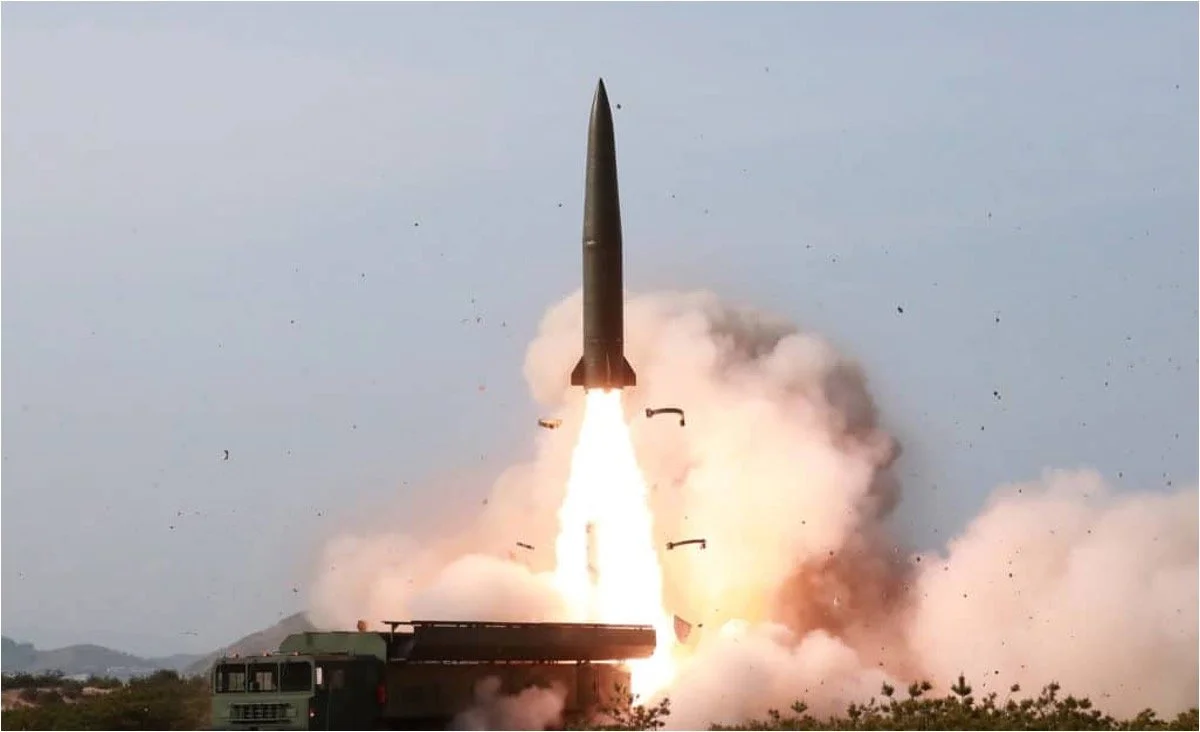
KN-23 (Source: CSIS)
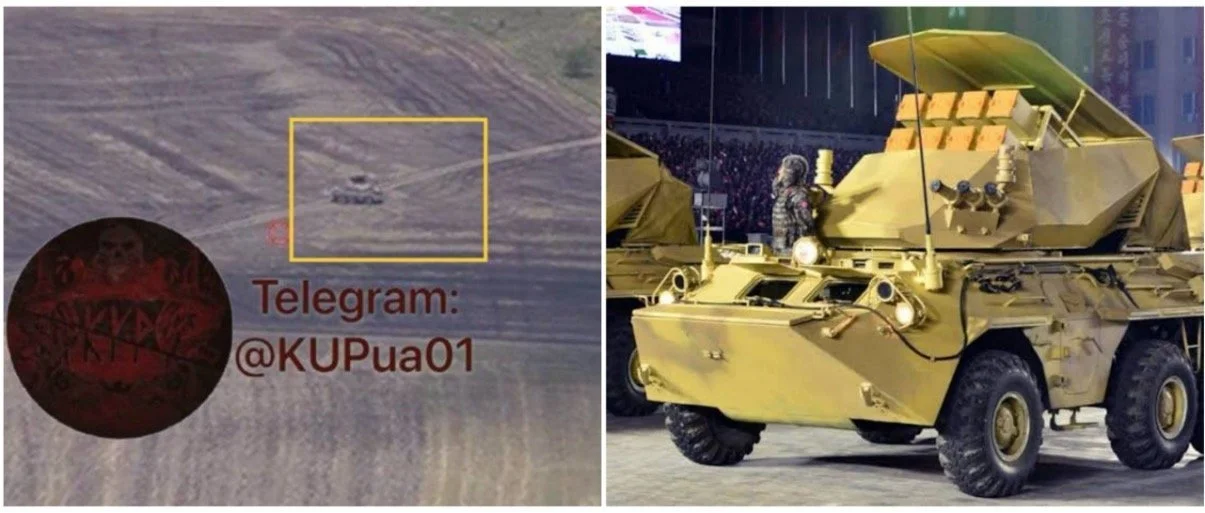
Bulsae-4 (Source: Militarnyi)

122mm rocket launcher and anti tank missile (9M113) (Source: The MSMT)

170mm self-propelled gun (Source: The MSMT)
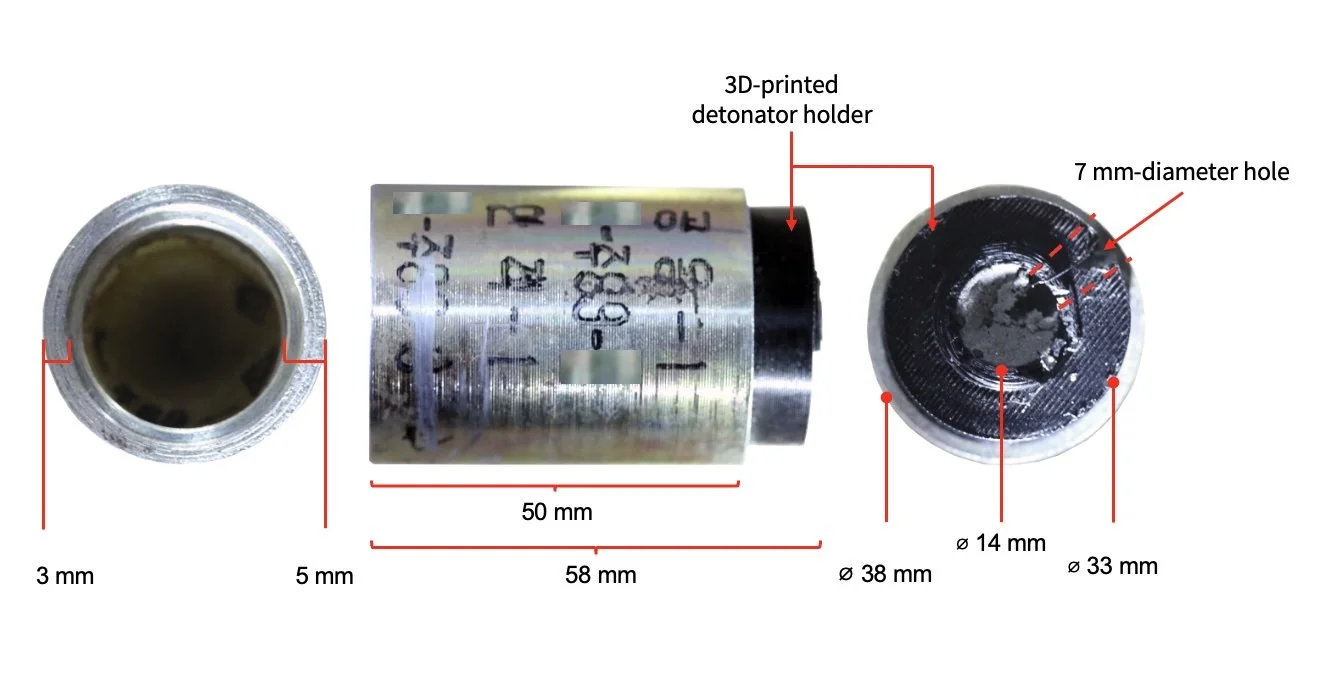
DPRK-produced copy of the US M42 High-Explosive, Dual-Purpose (HEDP) submunition (Source: CAR)
Means of arms transfer from DPRK to Russia
2022-11-18 (Railcars)
Khasan (Russia)-Tumangang (DPRK)
Source: Yonhap News.According to imagery released by National Security Council Coordinator for Strategic Communications John Kirby at a White House press briefing in Washington on 20 January 2023, five Russian railcars traveled from Russia to North Korea on 18 November 2022. The next day, 19 November, North Korea loaded the railcars with shipping containers, and the train returned to Russia.
From 2023-9-7 to 10-1 (Vessels)
Najin (Rajin) (DPRK)-Dunay (Konyushkov Bay) (Russia)
Source: The Panel’s report, S/2024/215, page. 34.According to imagery relased by the US Mission to the UN on 13 October 2023, the DPRK has provided Russia with more than 1,000 containers of military equipment and munitions between 7 September and 1 October 2023 (Since the Panel report includes a clearer map from a certain Member State, DPRK Monitor will cite it from there).
From January to December 2024 (Vessels)
Najin (Rajin)-Vostochnyy (Russia)
Source: The MSMT.According to the MSMT report, Russian cargo vessels delivered approximately 9 million rounds of mixed artillery and multiple rocket launcher ammunition from Najin (Rajin) port in the DPRK to Vostochnyy, Russia, in 49 shipments between January 1 and mid-December 2024.
The munitions were then transported by rail to ammunition depots in southwestern Russia.
From 2024-10-8 to 10-13 (Vessels)
Hamhung, Chongjin (DPRK)-Vladivostok (Russia)
Source: NIS (Annotated by the DPRK Monitor).According to the ROK’s National Intelligence Service (NIS), North Korea transported special forces units to Russian territory via Russian Navy transport ships from October 8 to 13. This confirmed the beginning of North Korean military participation.
Four landing ships and three escort ships belonging to the Russian Pacific Fleet completed the first phase of transporting approximately 1,500 North Korean special forces personnel from areas near Chongjin, Hamhung, and Musudan in North Korea (Attachment 1) to Vladivostok, Russia, during the same period.
From November-December 2023 (Cargo planes)
Source: The DPRK Monitor.The MSMT report indicates that sensitive and critical equipment, including missiles and transporter-erector-launchers (TELs), were primarily moved via rail or Russian military cargo planes.
The report identified the involvement of Russian Federation aircraft, specifically the Ilyushin Il-76, Il-76 MD, and Antonov AN-124, in transporting DPRK ballistic missiles and related cargo during November and December 2023.
Information indicated that missile exports by some of these aircraft continued in 2024.
DPRK soldiers' carried items
Below is a social media post from the Special Operations Forces of the Armed Forces of Ukraine (Сили спеціальних операцій ЗС України).
In the notebook of a DPRK special forces soldier eliminated in the Kursk region, he described how to bait and shoot down a Ukrainian drone.
In his notebook, Private Gyong Hong Jong detailed tactics for downing UAVs and hiding from Ukrainian artillery.
Source: Telegram.“How to neutralize a drone”
When a drone is spotted, a team of three (3 people) should be formed. The one luring the drone should maintain a distance of 7 meters, while the shooters should stay 10–12 meters away.
If the bait person remains standing, the drone will also stop. At this moment, the shooters should eliminate the drone.
“How to avoid artillery fire”
In the event of entering an artillery strike zone, designate a next rally point for the group, then split into smaller groups and exit the area.
Another method: since artillery doesn’t strike the exact same spot twice, it’s possible to hide at a previous impact point and then leave the strike zone.
Kim Jong Un’s letter (Translated and edited by DPRK Monitor)
Source: Telegram.To our heroic (?) military officers, commanders, and soldiers fulfilling their military missions in overseas operational areas!
To the interpreters and other support personnel!
As we welcome the New Year 2025, I send my greetings and congratulations to you.
You have experienced both the heartbreaking sacrifices and the exhilarating triumphs of costly battles.
You have shared bonds with many noble combat comrades and felt the solemn emotion of devotion to the homeland.
Welcoming the New Year in a faraway land, I am sure you miss your beloved parents, wives, and brothers more than ever before.
As you continue to carry out the homeland’s orders through the fading days of the outgoing year and into the hardships of the incoming one, I find it hard to choose words that would truly express the encouragement and gratitude owed for your devotion and sacrifice.
On behalf of the Workers’ Party of Korea and the Government of the Democratic People’s Republic of Korea, and with the support of our beloved people and all service members across the entire army, I send my heartfelt thanks to all of you — the heroes of our nation and the bearers of our homeland’s honor.
Comrades! I miss you all dearly.
Please never forget, even for a moment, that I am constantly praying and wishing for your health and safe return.
Until the day you successfully complete your assigned military mission, I ask that you all stay healthy, fight on with ever greater courage, and persevere.
Kim Jong Un
December 31, 2024
Korean-Russian Military Terminology Translation Notes (Translated by DPRK Monitor)
Source: Telegram.1.섯 (Стой) – Halt/Freeze
2.손 들엇 (Руки вверх) – Hands up
3.무기를 버리라 (Брось оружие) – Drop your weapon
4.뒤로 돌앗 (Кругом) – Turn around
5.앞으롯 (Вперёд) – Move forward
6.엎드렷 (Ложись) – Lie down
7.옷을 벗으라 (Разденься) – Take off your clothes
8.손을 뒤로 가져가라 (Руки назад) – Put your hands behind your back
9.천천히 (Медленно) – Slowly
10.오라 (Ко мне) – Come here
11.투항하라 (Здавайтесь) – Surrender
12.너희들은 포위되였다 (Вы окружены) – You are surrounded
13.투항하면 살려준다 (Если здаетесь, гарантирую вашу жизь) – Surrender and you will be spared
14.저항은 무의미하다 (Сопротивление не имеет значения) – Resistance is futile
15.지휘관이 누구인가 (Кто командир?) – Who is the commander?
16.무인기수는 누구인가 (Кто оператор БПЛА?) – Who is the drone operator?
17.손을 들고 진지밖으로 나오라 (Руки вверх, выходи из окопа) – Come out of the position with your hands up
18.고향은 살아있는 너희들을 기다린다 (Семья ждёт вас) – Your homeland is waiting for you alive
19.혁띠를 풀라 (Расстегни ремень) – Undo your belt
20.신발을 벗으라 (Сними обувь) – Take off your shoes
21.지뢰원이 어디에 있는가 (Где мины?) – Where are the mines?
22.우리를 안내하라 (Проводи нас) – Guide us
23.무인기들을 어디서 띄우는가 (Где спускают квадрокоптер?) – Where are the drones launched from?