DPRK Missile Programme

Image source: Open Nuclear Network
Ballistic Missile Launch (October 3, 2026)
According to the Ministry of Defense Japan, at around 6:36 a.m. on October 3, North Korea launched at least one ballistic missile from near its east coast toward the northeast. The ballistic missile is estimated to have reached a maximum altitude of approximately 90 km and flown approximately 680 km, and to have landed in the Sea of Japan, outside Japan’s EEZ.
According to Yonhap News, South Korea’s Joint Chiefs of Staff (JCS), as reported by Yonhap, said the missile was detected at around 6:30 a.m. in the Wonsan area and flew more than 700 km.
North Korean state media (KCNA) described the launch as a drill of an intermediate-range strategic missile fired from an eastern region toward the East Sea. It said the drill trained the crews of the hypersonic strategic weapon system and evaluated the reliability, efficiency, and mobility of the DPRK’s war deterrent. KCNA claimed the missile hit its target point at 43°36'28.04" N, 138°00'47.02" E, 1,000 km away.
DPRK announcement differs from the roughly 680 km (Japan) and 700+ km (South Korea) ranges announced by the other two governments. Regarding this difference in range, NK News cited a statement by Kim Yo Jong: “She claimed the missile’s maneuvering flight made it difficult for South Korean and Japanese forces to track its full trajectory...assessments from South Korean and Japanese authorities were based on incomplete tracking of the flight, mocking Seoul and Tokyo’s detection methods.”
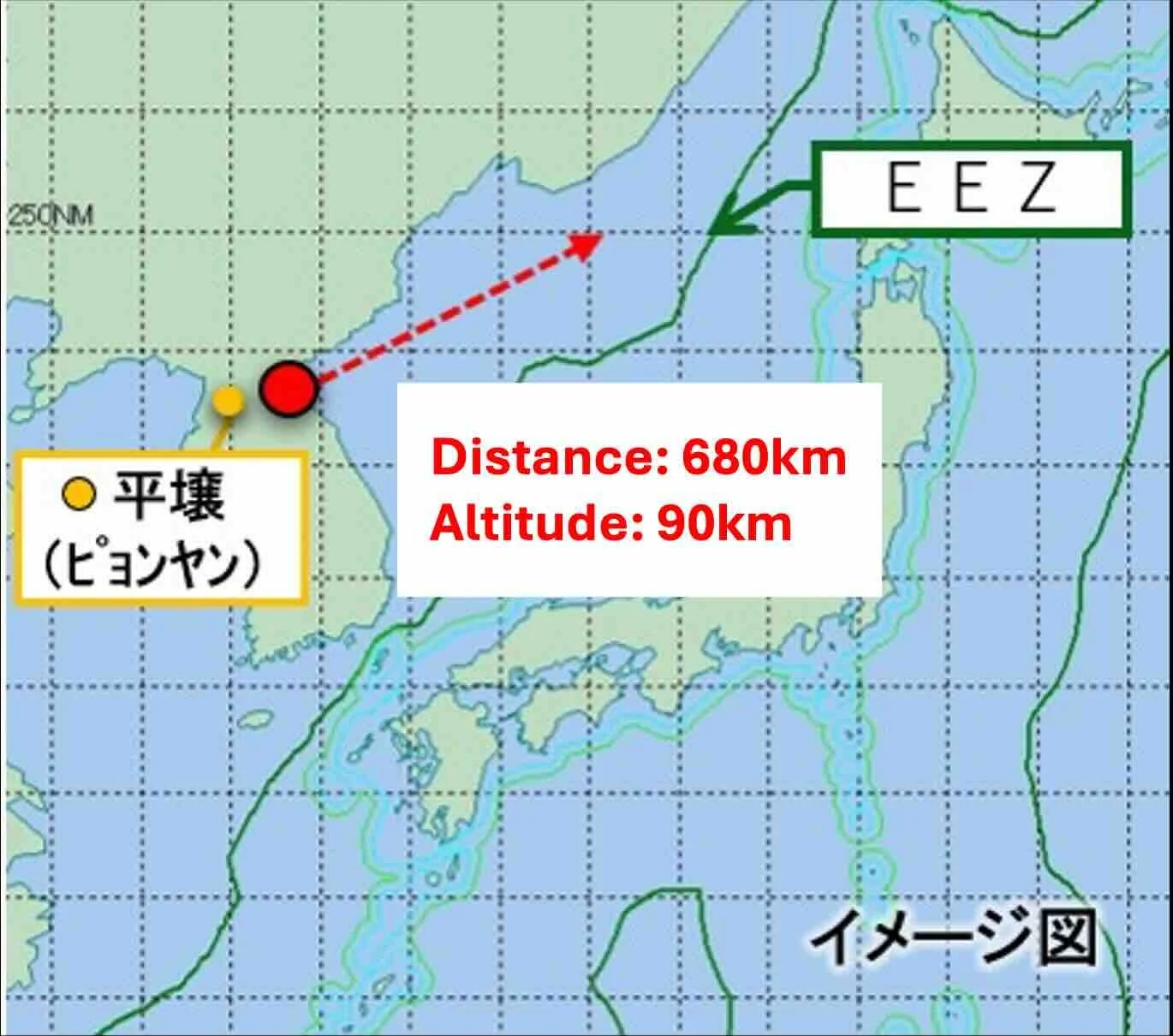
Source: Japan MOD
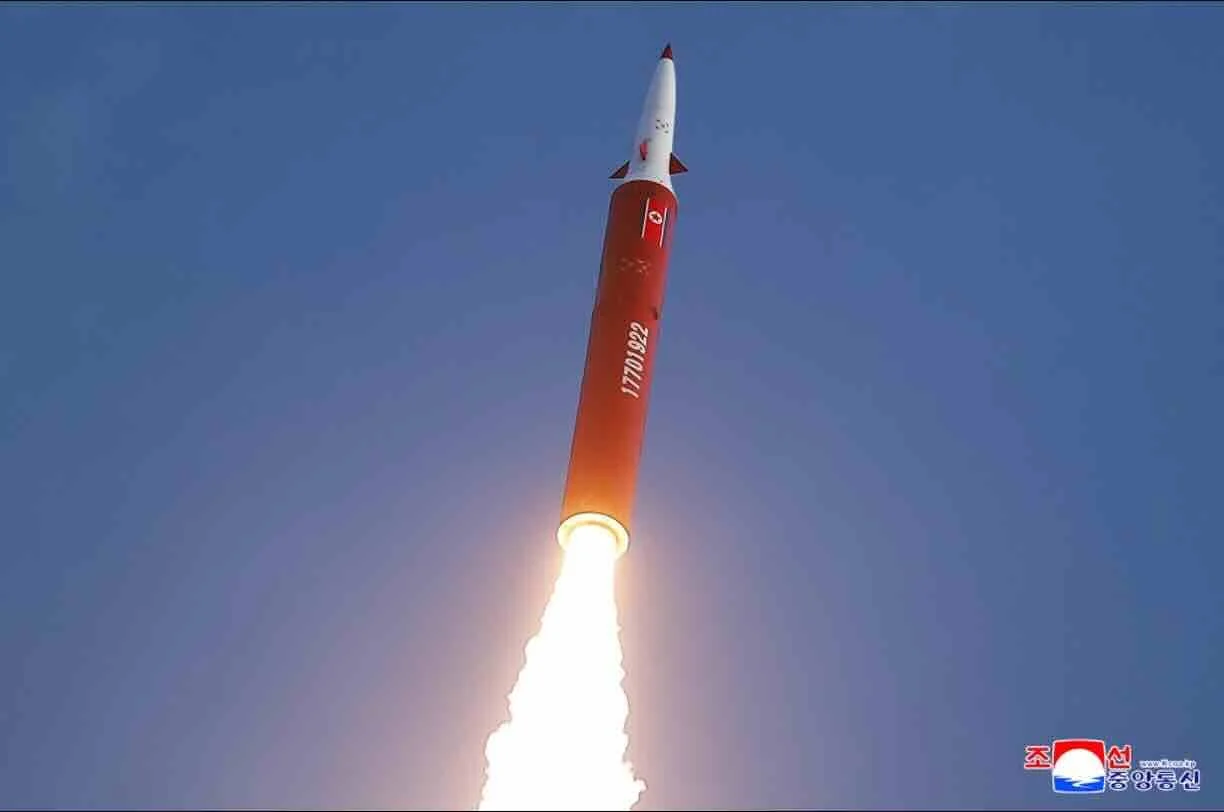
Source: KCNA
Ballistic Missile Launch (September 20, 2026)
According to the Ministry of Defense Japan, DPRK launched at least two ballistic missiles on 20 September:
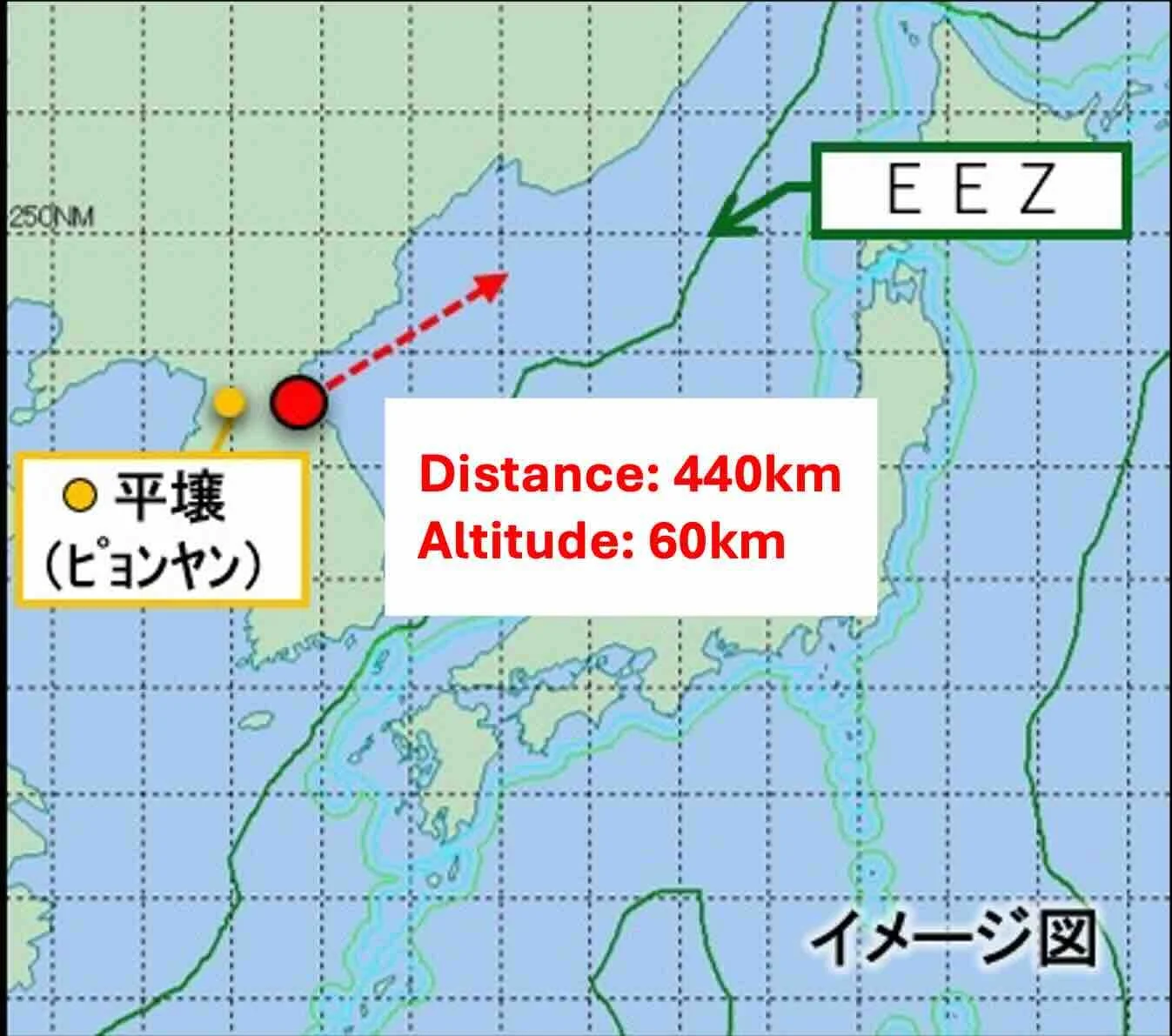
1. At around 15:00 today, North Korea launched at least one ballistic missile toward the northeast from the vicinity of its east coast. Japan, the United States, and the Republic of Korea are currently analyzing the details in close coordination. The missile is estimated to have reached a maximum altitude of approximately 60 km and flown approximately 440 km, and to have landed in the Sea of Japan, outside Japan's exclusive economic zone (EEZ).
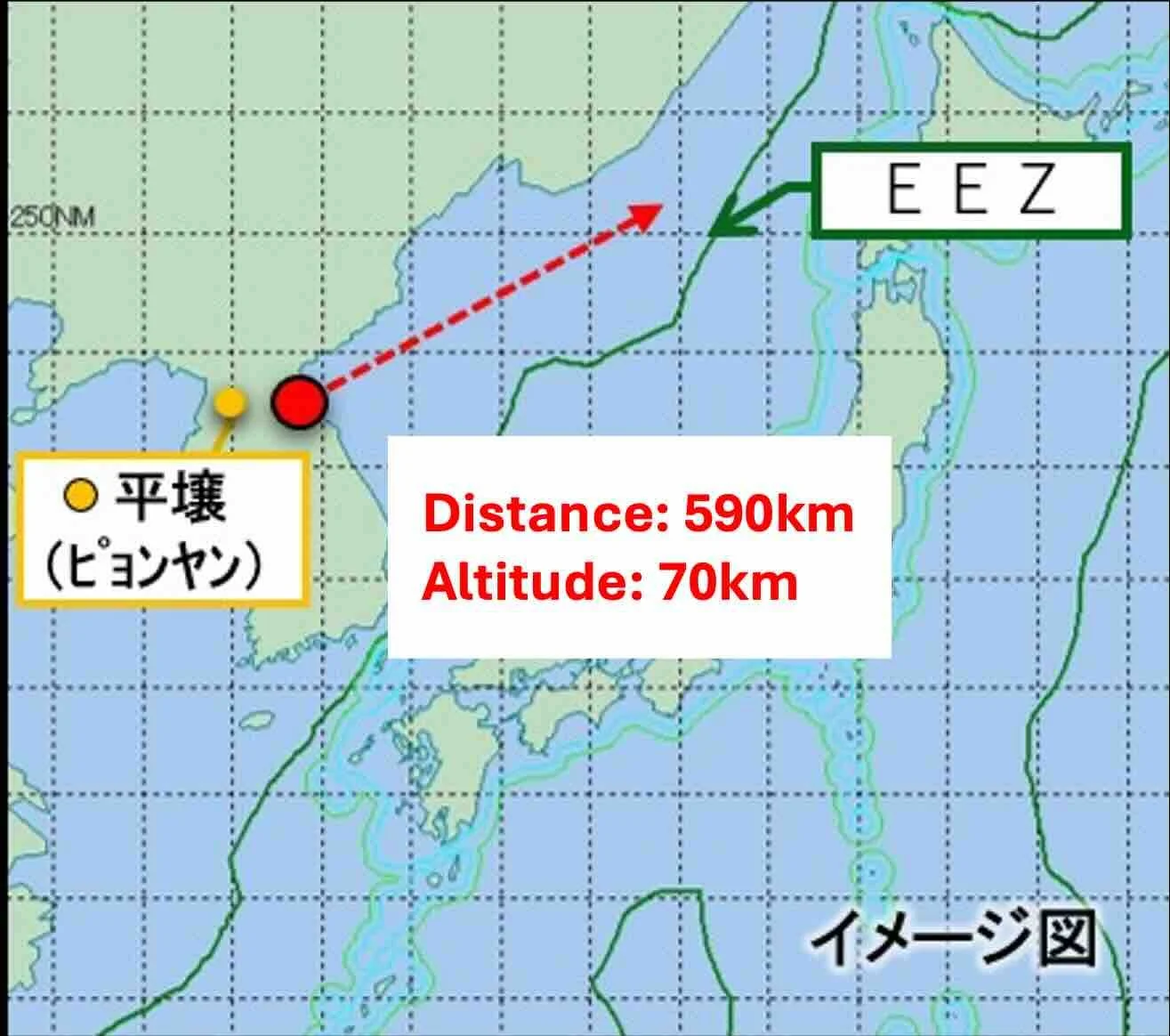
2. At around 17:54 today, North Korea launched at least one ballistic missile toward the northeast from the vicinity of its east coast. Japan, the United States, and the Republic of Korea are currently analyzing the details in close coordination. The missile is estimated to have reached a maximum altitude of approximately 70 km and flown approximately 590 km, and to have landed in the Sea of Japan, outside Japan's EEZ.
1st launch
- Launch time: approx. 15:00
- Maximum altitude: approx. 60 km
- Distance flown: approx. 440 km
2nd launch
- Launch time: approx. 17:54
- Maximum altitude: approx. 70 km
- Distance flown: approx. 590 km
Separately, according to KBS news on September 20, North Korea fired one short-range ballistic missile (SRBM) each into the East Sea from the Wonsan area at around 3:00 p.m. and 5:50 p.m. today, in quick succession, the Joint Chiefs of Staff (JCS) said. The JCS said the first missile flew approximately 450 km and the second approximately 600 km, adding that it is conducting a detailed analysis of the exact specifications.
1st launch
- Launch time: approx. 15:00
- Maximum altitude: not stated in the report
- Distance flown: approx. 450 km
2nd launch
- Launch time: approx. 17:50
- Maximum altitude: not stated in the report
- Distance flown: approx. 600 km
It is also worth noting that Korean Central News Agency (KCNA), in its report on the 22 September, released footage of the missile test showing figures on a monitor, and these figures differed from the flight distance announced by South Korean and Japanese defense authorities. Regarding this discrepancy, South Korea's Joint Chiefs of Staff (JCS) stated: "...the way North Korea makes claims and propaganda can't be trusted. Because they're skilled at that kind of strategy and tactics, I'd appreciate it if you could keep that in mind as you look at this."
1st launch
2nd launch
Source: Japan MOD
Source: KCNA
DPRK media reported:
Distance: 908.2km
ROK JCS reported:
Distance: 450km, 600km
Source: KBS
DPRK media reported:
Speed: 2,146m/s
(* Converted to the speed of sound…)
Approximately Mach 6.3 hypersonic
“Hwasongpho-11Ma-1 Trajectory”
Source: KBS
‘Pull-up’ maneuver
Source: KCNA (Left, annotated by DM), KBS (Right, annotated by DM)

Source: 대한민국 정책 브리핑
September 22, 2026, ROK JCS Briefing
"I think you reporters already know that the way North Korea makes claims and propaganda can't be trusted. Because they're skilled at that kind of strategy and tactics, I'd appreciate it if you could keep that in mind as you look at this."
“북한이 주장하고 선전하는 방식과 방법에 대해서는 아마 기자 여러분들도 신뢰를 할 수는 없다고 이미 알고 계실 겁니다 그런 전략 전술에 능하기 때문에 여러 분들께서 그런 부분들을 감안해 주시고 바라봐 주시면 감사하겠습니다”
Ballistic Missile Launch (September 12, 2026)
According to the South Korean media reports, North Korea fired several short-range ballistic missiles from the Wonsan area toward the East Sea (the Sea of Japan), around 5:20 a.m. today.
- Missiles flew approximately 250 km
- Military authorities believe the weapons were likely Hwasong-11 series short-range ballistic missiles, or the 600mm super-large multiple rocket launcher (claimed by North Korea to be capable of carrying the "Hwasan-31" tactical nuclear warhead)
Source:
KCNA report on September 14, 2025
The following is a summary of the content reported on September 14 by North Korea's media KCNA, two days after the missile launch.
- Drill name: Joint firepower attack drill of long-range artillery and missile units
- Date: September 12, 2026
- Oversight: Pak Jong Chon (Vice-Chairman, Central Military Commission of the Workers' Party of Korea) and Maj. Gen. Yu Chang Son (Director, Artillery Bureau, KPA General Staff)
- Units involved: Subunits selected from five artillery and missile joint units
The article does not give specific model/system designations, however, the KCNA photos show that, at least, Hwasong-11 (KN-23), 600 mm MLRS (KN-25), drones, and a cruse missile were tested (See below table).
| Category | Name | As stated in the article |
|---|---|---|
| Unmanned system | Attack drones (various kinds) | "attack drones of various kinds" |
| Missile | Tactical cruise missile | "tactical cruise missile" |
| Rocket artillery | Large-caliber thermal-pressure multiple rocket launcher | "large-caliber thermal-pressure multiple rocket launcher" |
| Missile | Tactical ballistic missile | "tactical ballistic missile" |
Source: KBS (annotated by DM)
Source: KCNA
Ballistic Missile Launch (August 20, 2025)
According to the Ministry of Defense of Japan, North Korea launched multiple ballistic missiles today at approximately 17:04, from its inland area, toward the northeast. Japan, the US, and the ROK are currently closely coordinating to analyze the details, but it is estimated that the launched ballistic missiles reached a maximum altitude of approximately 90 km, flew a distance of approximately 320 km, and fell outside Japan's EEZ, near the eastern coast of the Korean Peninsula.
Separately, according to Yonhap News on August 21, the South Korea's Joint Chiefs of Staff (JSC) announced that it had detected more than 10 short-range ballistic missiles fired from the Pyongyang area toward the East Sea at around 5 p.m. the previous day (DM notes: August 20) and that South Korea and the US are analyzing the precise specifications. According to the Joint Chiefs, the ballistic missiles flew 300 km. The military is analyzing the launch with an emphasis on the possibility that it involved 600mm super-large multiple rocket launchers (KN-25).
Source: Japan MOD (annotated by DM)
Source: Yonhap News
August 14, 2026
Satellite Imagery Reveals 21 New North Korean Military Facilities Near DMZ
Recently, Radio Free Asia (RFA) reports "North Korean buildings near DMZ could be rocket infrastructure, experts say" on satellite imagery analysis of 21 new North Korean military facilities built near the DMZ. Experts suggest these structures may be "drive-through" infrastructure for storing and maintaining transporter erector launchers (TELs) and multiple rocket launcher systems (MLRS). Each facility is tall enough for vehicles to raise missiles upright for launch preparation, and they are located just 50 kilometers from Seoul. This construction is seen as evidence of North Korea's buildup of frontline firepower and mechanization of its forces.
Summary
Discovery of New Infrastructure: Satellite imagery analyzed by private analyst Jacob Bogle revealed 21 identical 52-meter-long drive-through structures built between 2023 and early 2025 near Kaesong, positioned only a few kilometers north of the DMZ and 52 kilometers from Seoul.
Specialized Maintenance Design: Bogle points out that each building features a central drive-through hall for easy vehicle access and a raised midsection roof specifically designed to allow launchers to elevate their missile or rocket modules for maintenance or training.
Primary Focus on MLRS: While the structures could support various systems, Bogle describes them as a potent expansion of North Korea's Multiple Launch Rocket System (MLRS) infrastructure. Joseph S. Bermudez Jr. complements this by noting the access roads' turning radii appear more suitable for MLRS or smaller vehicles than for large-scale Transporter Erector Launchers (TELs).
Likely Missile Systems: The facilities are expected to house advanced systems like the 600mm KN-25 and the Hwasong-11D short-range missile (range over 100km). Bruce Bennett notes that a single 52-meter building could accommodate a battery of three to four 10-meter launchers for these 600mm missiles, potentially housing the 50 new TELs recently unveiled by Kim Jong Un.
Forward Deployment Strategy: Bermudez emphasizes that the construction of so many identical structures near the border indicates a reinforcement of forward-deployed assets intended to mechanize front-line forces for rapid advancement. Bennett adds that the short range of these specific missiles necessitates their placement close to the DMZ.
Strategic Redundancy: Bogle interprets this pattern as a long-standing survival strategy based on redundancy. By multiplying identical buildings and underground facilities, North Korea places a greater burden on U.S. and South Korean intelligence agencies to track the exact location of weapons at any given time.
The locations of the 21 MLRS support buildings are grouped into three main sectors near the DMZ, south of the city of Kaesong. Analyzed by Jacob Bogle (RFA)
Source: RFA
Two of the 52-meter support buildings while they are under construction. The bottom image from 2024 reveals the internal layout of the structures. Analyzed by Jacob Bogle (RFA)
Source: RFA
Coordinates of the 21 support buildings
Source: Table created by DM with support from Jacob Bogle.
Ballistic Missile Launch (August 12, 2026)
According to the Ministry of Defense of Japan, on August 12, North Korea launched at least one ballistic missile eastward from around its east coast at approximately 5:59 a.m.. Details are currently being closely analyzed in cooperation among Japan, the US, and South Korea, but the missile is estimated to have reached a maximum altitude of approximately 90 km, flown approximately 690 km, and fallen outside Japan's EEZ in the Sea of Japan.
Separately, according to Yonhap News on August 12, North Korea fired a ballistic missile toward the East Sea on Wednesday morning, South Korea's Joint Chiefs of Staff (JCS) reported. The missile was launched around 6 a.m. from the Wonsan area on the east coast and flew more than 700 kilometers, with South Korean and U.S. authorities currently analyzing its specifications. This marked the second such launch in under a week, seen as a protest against an upcoming South Korea-US joint military exercise.
Source: Japan MOD (annotated by DM)
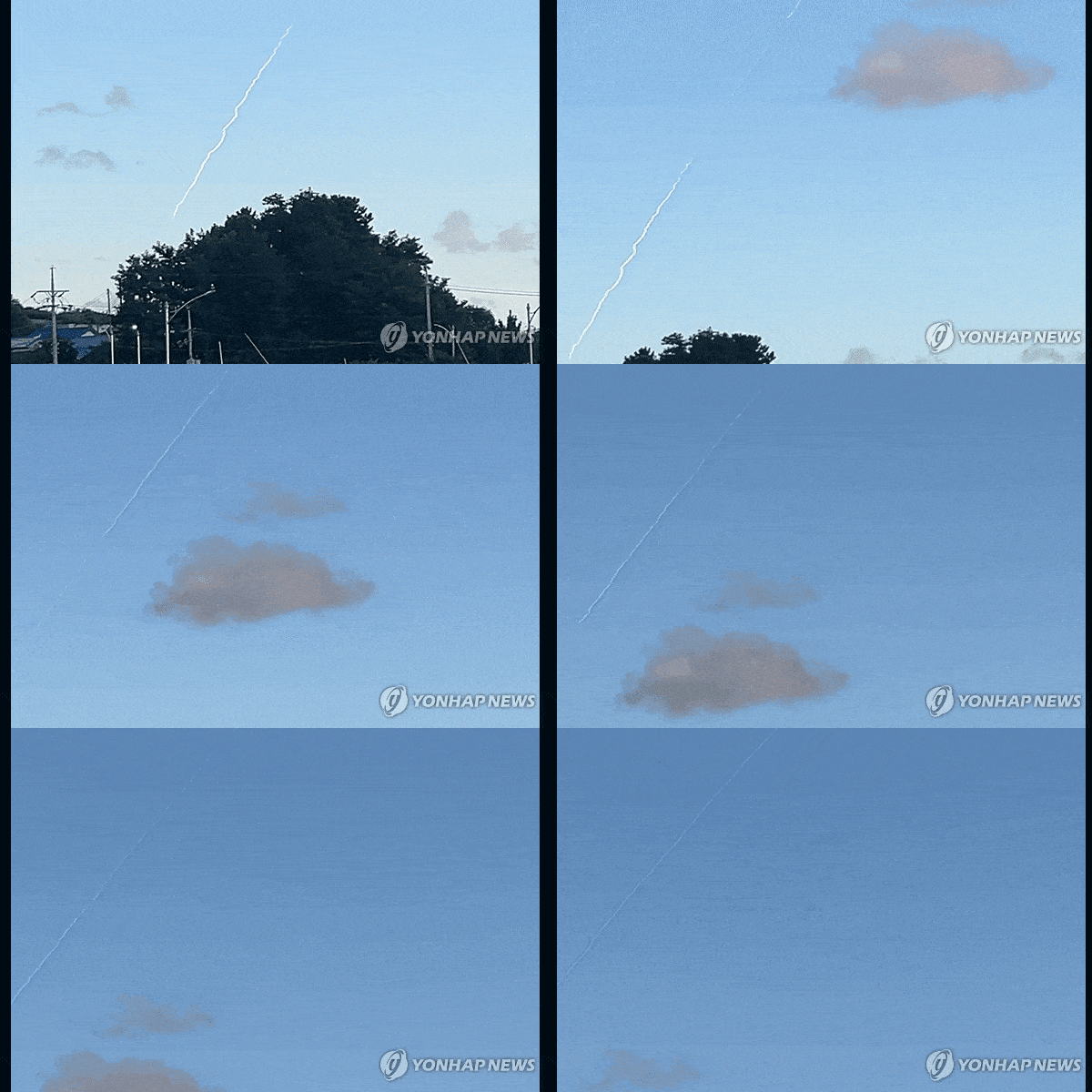
Source: Yonhap News
Ballistic Missile Launch (August 6, 2026)
According to Japan's Ministry of Defense, at least one ballistic missile was launched from North Korea at approximately 17:02 JST on August 6. Japan, the US, and South Korea are currently coordinating closely and analyzing details, but the missile is assessed to have fallen near the eastern coast of the Korean Peninsula. No impact within Japan's territory or EEZ has been confirmed.
Separately, according to Yonhap News, South Korea's Joint Chiefs of Staff detected a short-range ballistic missile fired by North Korea from the vicinity of Wonsan on the east coast into the East Sea at around 5:00 PM the same day.
DM will update as further details become available.
Ballistic Missile Launch (June 25, 2026)
Summary
KCNA reported on June 26 that Kim Jong Un, General Secretary of the Workers' Party of Korea and President of the State Affairs of the DPRK, on June 25 supervised tests of "major weapons" organized by defence scientific research institutes, conducted under the plan for "modernizing artillery and missile forces" to attain the "five-year goal for national defence development."
- Upgraded 240mm-caliber 24-tubular multiple rocket launcher system: Tests analyzed and evaluated its "combat characteristics." Described as an "improved type corps-level firepower system," its firing range has increased to 90 km. All elements of the firepower system were automated, and a "self-steered precise guidance system" was introduced.
- Special mission warhead of tactical ballistic missile: Tests evaluated the "power" of this warhead, which is aimed at "inflicting fatal damage on major targets including airfields, ports and power facilities of the enemy."
- 155mm self-propelled gun-howitzer: Tests evaluated "hit accuracy" of shells with an "extended firing range" — specifically 65 km — from the 155mm self-propelled gun-howitzer, described as of "great military significance."
Upgraded 240mm-caliber 24-tubular multiple rocket launcher system
155mm self-propelled gun-howitzer
Special mission warhead of tactical ballistic missile
Screen of target island
Source: photos from KCNA
Missile launch location and target identified by NK News
Source: Google Earth Pro (annotated by DM)
Ballistic Missile Launch (May 26, 2026)
Summary
According to South Korean media, the Joint Chiefs of Staff (JCS) stated that the DPRK launched close-range ballistic missiles (CRBMs) into the West Sea on the 26th. The JCS announced that the DPRK fired several rounds, including CRBMs, from the vicinity of Jongju, North Pyongan Province, on this day.
KCNA reported on May 27 that the Missile Administration and the Academy of Defence Sciences of the Democratic People's Republic of Korea conducted a series of military tests on May 26 to advance the national five-year defense development plan. Supervised by Kim Jong Un, these tests focused on validating the integration of advanced artificial intelligence, autonomous navigation, and precision guidance systems into tactical missile and artillery platforms.
Key points
Tactical Ballistic Missile: Tested for the effectiveness and power of its specialized mission warhead.
240mm Controlled Artillery Rocket: Demonstrated expanded firing range and reliability through the use of an ultra-precision autonomous navigation system.
Tactical Cruise Missile: Validated AI-guided hit accuracy. Designed for deployment with long-range artillery brigades in the southern border area, this system features:
Guidance Systems: Combination of ultra-precision autonomous navigation and TERCOM (terrain contour matching).
Targeting: AI-integrated terminal guidance function.
Capability: Precision strikes on targets up to 100 kilometers away using a multimode flight profile (gliding and propelling).
TEL
240mm Controlled Artillery Rocket
Tactical Ballistic Missile
Hwasong-11 D (NK News, Colin Zwirko)
Tactical Cruise Missile
Source: photos from KCNA
Ballistic Missile Launch (April 19, 2026)
Summary
According to Japan Ministry of Defense, on April 19, 2026, around 6:00 AM, DPRK launched multiple ballistic missiles from the vicinity of its eastern coast. While specific details are currently undergoing rigorous analysis through close cooperation between Japan, the US, and the Republic of Korea, it is estimated that the missiles fell near the eastern coast of the Korean Peninsula. To date, there has been no confirmation of any projectiles entering Japanese territory or its Exclusive Economic Zone (EEZ).
Time of Incident: Approximately 06:00 JST.
Launch Location: Near the eastern coast of the DPRK.
Projectile Type: Multiple ballistic missiles.
Impact Zone: Estimated to have fallen within the waters off the eastern coast of the Korean Peninsula.
Rodong Sinmun reported on April 20 that on April 19, 2026, the DPRK Missile General Bureau conducted a test launch of the upgraded 화성포-11라 (Hwasongpho-11Ra) surface-to-surface tactical ballistic missile. The primary objective was to evaluate the combat power and effectiveness of newly developed warheads—specifically submunition (cluster) and fragmentation-mine types. Presided over by Kim Jong Un, the test involved the simultaneous launch of five missiles at a designated island target 136 km away. The high-density strike successfully covered an area of 12.5 to 13 hectares, signaling a significant enhancement in the DPRK's ability to suppress specific target zones with precision and high-volume firepower.
Key Points
- Weapon System: Upgraded Hwasongpho-11Ra tactical ballistic missile (5 missiles ).
- Warhead Technology: Validation of "dispersion" (submunition) and "fragmentation-mine" warheads designed for area-denial and high-density suppression.
- Distance: Target island (Al Som 알섬) set at the 136 km mark.
- Impact Area: High-density strikes covered an area of 12.5 to 13 hectares (Al Som 알섬)
- Leadership Presence: Kim Jong Un personally guided the test, accompanied by high-ranking officials including Kim Jong Sik and General Jang Chang Ha, as well as the commanders of the 1st, 2nd, 4th, and 5th KPA Corps.
- Strategic Significance: Kim Jong Un emphasized that the five-year development cycle for these warheads has successfully met the military's operational requirements for both high-precision and high-density suppression capabilities.
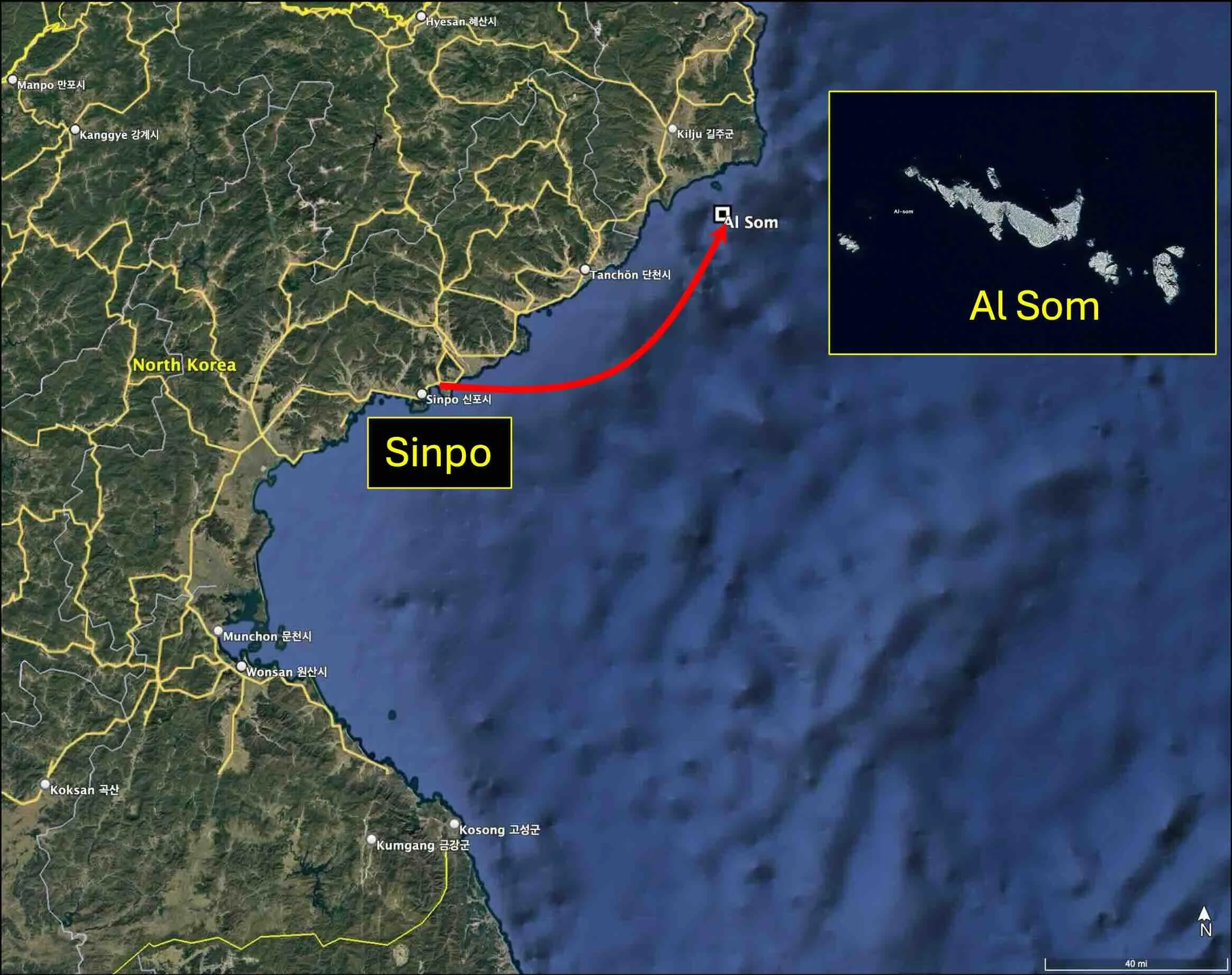
Source: Google Earth Pro (annotated by DPRK Monitor)
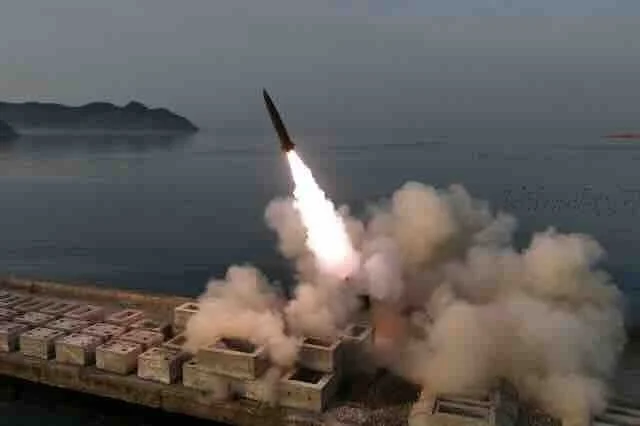
Hwasongpho-11 Ra (화성포-11라)
Source: Rodong Sinmun
Ballistic Missile Launch (April 8, 2026)
Summary
According to Japan Ministry of Defense, on April 10, 2026, North Korea conducted a missile test from its eastern coast, launching at least one ballistic missile toward the East. The projectile followed an irregular trajectory, reaching a peak altitude of approximately 60km and traveling over 700km before falling into the Sea of Japan (the East Sea), outside Japan's Exclusive Economic Zone (EEZ). While authorities have confirmed at least one launch, Japanese, U.S., and South Korean intelligence agencies are maintaining close coordination to determine if additional projectiles were involved and to analyze the specific technical nature of the flight.
Launch Time: Approximately 14:23 JST.
Launch Location: Vicinity of the North Korea’s eastern coast.
Flight Distance: Exceeded 700km.
Maximum Altitude: Approximately 60km.
Korean Central News Agency (KCNA) reported on April 9, 2026, that from April 6 to 8, 2026, the DPRK’s Academy of Defence Science and Missile Administration conducted a series of multi-domain weapons tests aimed at diversifying their strike and defense capabilities. The trials focused on non-kinetic "special assets," such as electromagnetic weapons and carbon fiber (blackout) bombs, alongside conventional kinetic upgrades. A primary objective was the performance evaluation of the Hwasongpho-11 Ka (화성포-11가) tactical ballistic missile equipped with a high-density cluster warhead, intended for large-scale area denial. These tests, overseen by General Kim Jong Sik (김정식대장), represent a push toward integrating electronic warfare with modernized tactical missile systems.
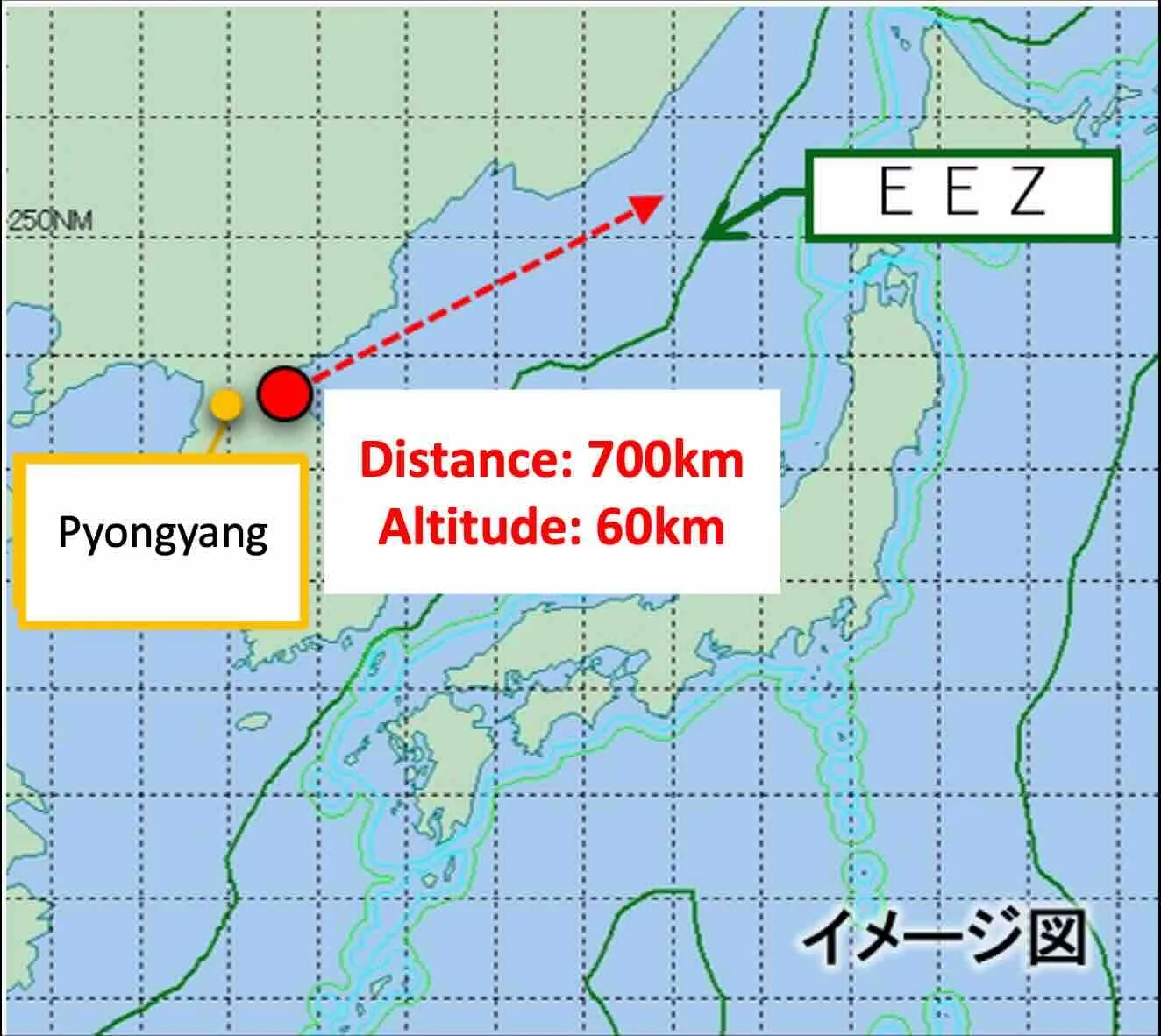
Source: MOD (annotated by DPRK Monitor)
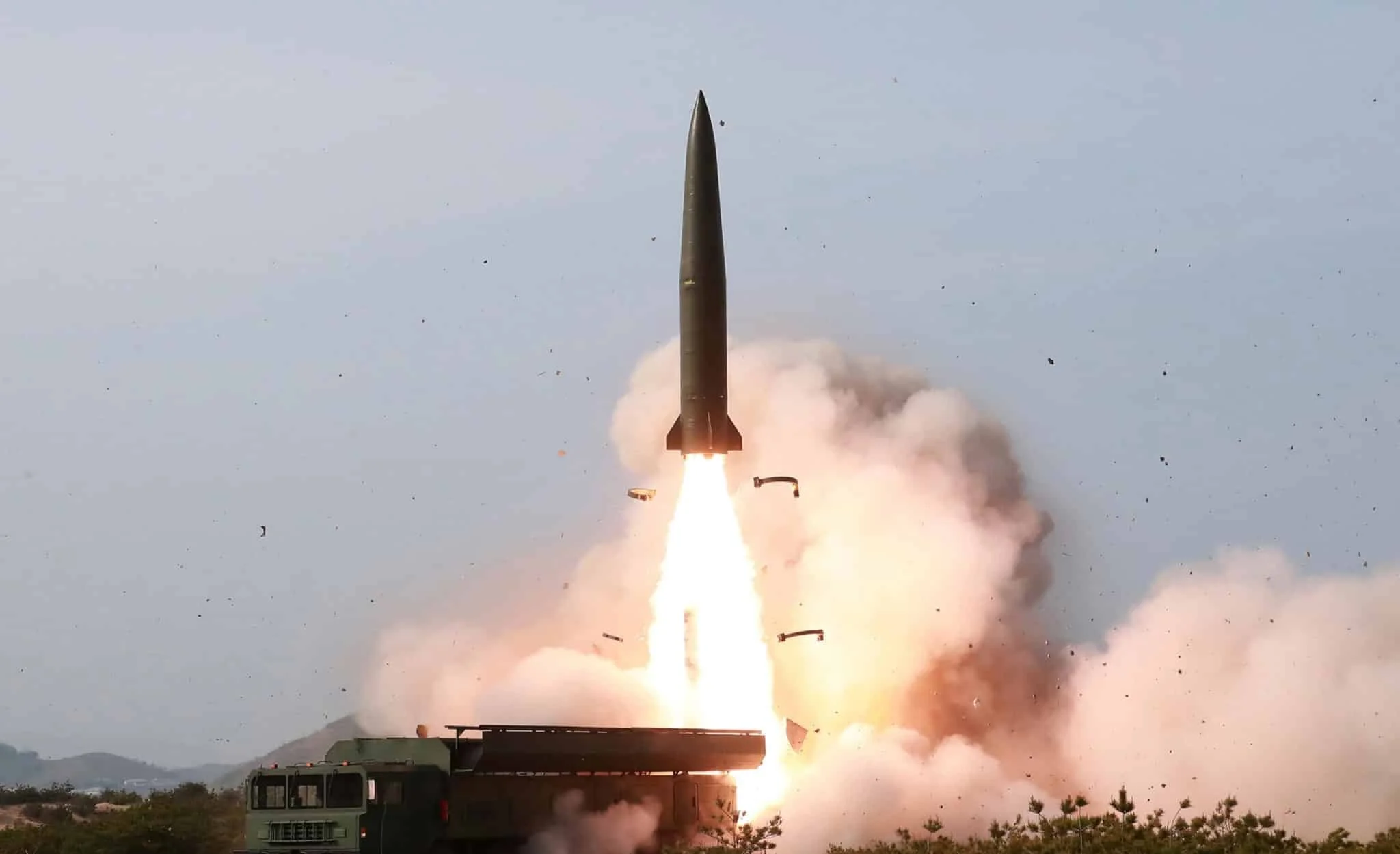
Hwasongpho-11 Ka (화성포-11가) KN-23
Source: CSIS
Ballistic Missile Launch (March 14, 2026)
Summary
According to Japan Ministry of Defense, On the afternoon of March 14, 2026, North Korea conducted a provocative military action by launching multiple ballistic missiles from its western coast. The missiles traveled in a northeasterly direction, reaching a peak altitude of approximately 80 km and covering a flight distance of roughly 340 km. Initial assessments indicate that the projectiles landed in the waters off the eastern coast of the Korean Peninsula, outside of Japan's Exclusive Economic Zone (EEZ).
According to a KCNA article on March 15, Kim Jong Un personally supervised a firepower strike drill conducted by a long-range artillery sub-unit in the western area of the DPRK on March 14. The exercise involved the simultaneous launch of twelve 600mm-caliber ultra-precision multiple rocket launchers. These rockets successfully traversed the peninsula to strike an island target in the East Sea, located approximately 364.4 km from the launch site (the Sunan area). Kim Jong Un emphasized that the systems possess a striking range of 420 km, placing hostile forces within reach of the DPRK’s tactical nuclear delivery platforms.
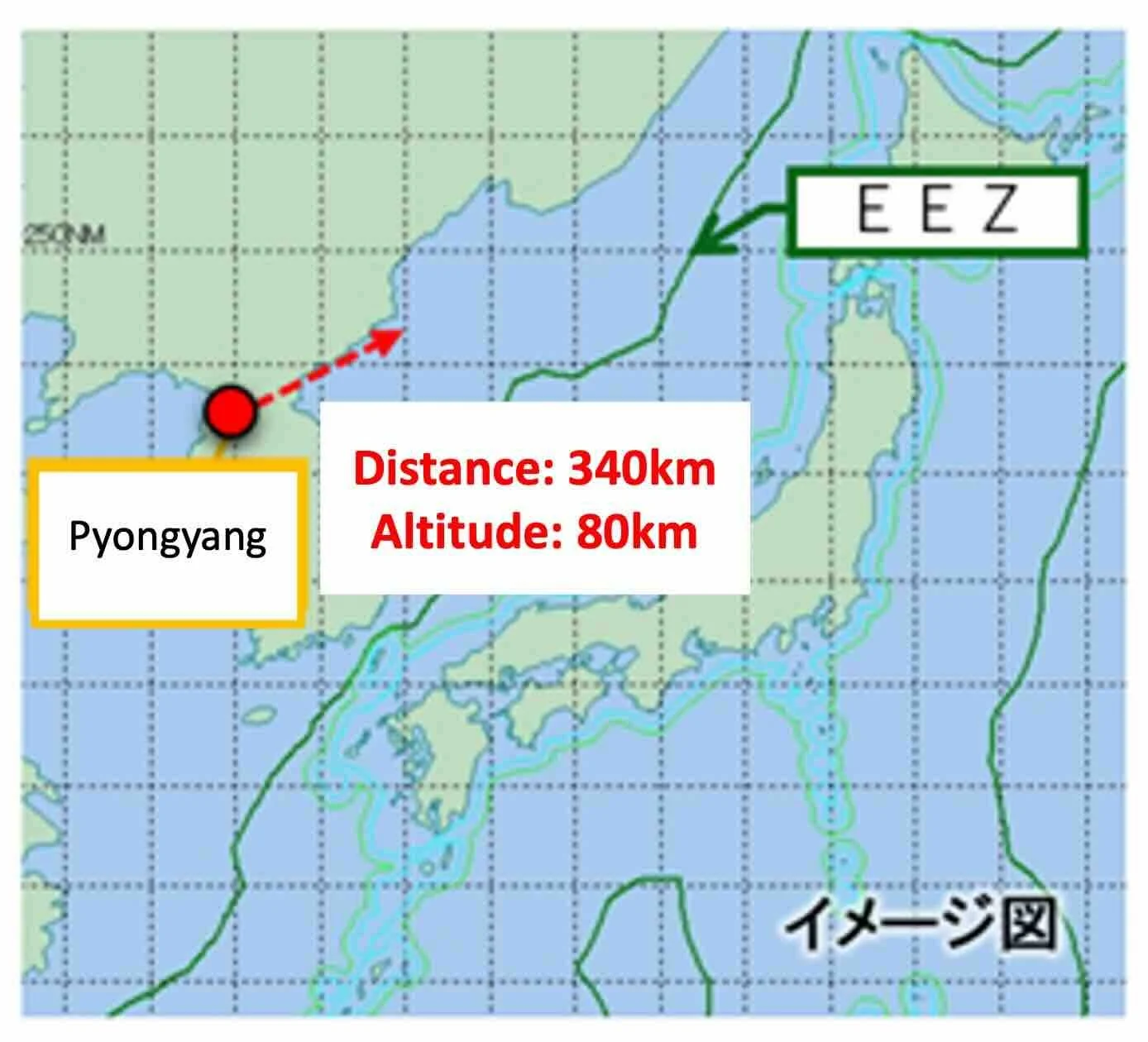
Source: MOD (annotated by DPRK Monitor)
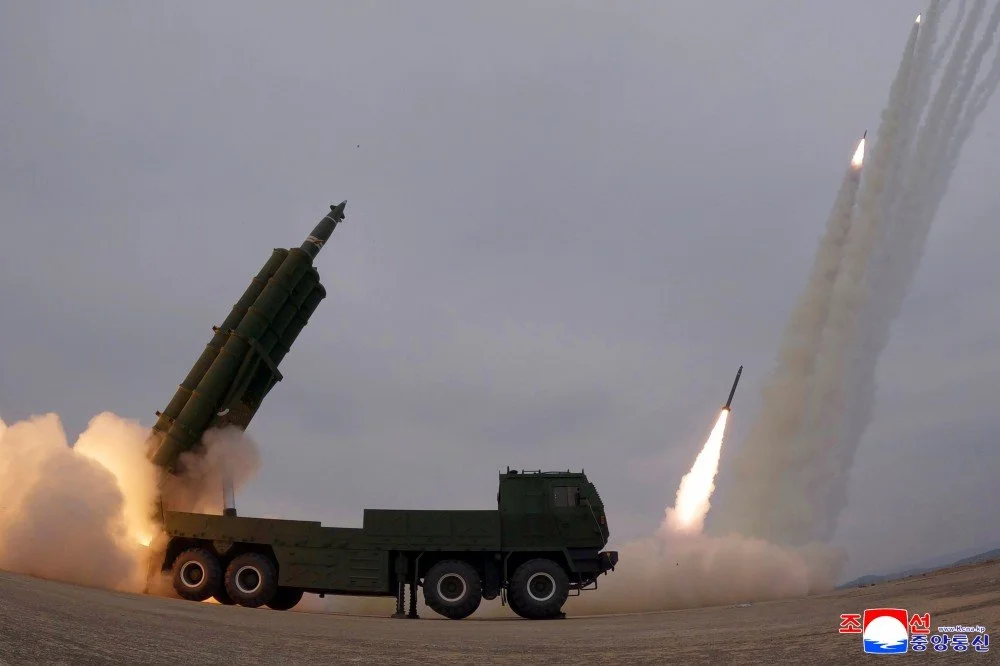
600mm-caliber ultra-precision multiple rocket launchers (KN-25)
Source: KCNA
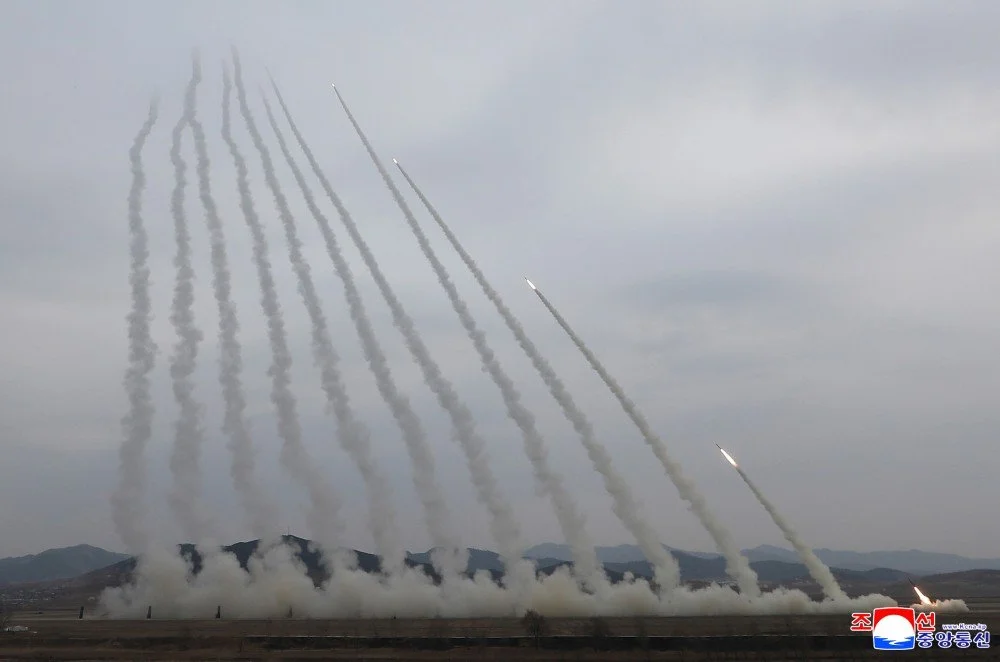
Source: KCNA
Ballistic Missile Launch (January 27, 2026)
Summary
Acoording to Japan Ministry of Defense, North Korea launched two ballistic missiles from its western coast toward the east this afternoon. While a detailed joint analysis by Japan, the United States, and the Republic of Korea is currently underway, preliminary data indicates the missiles landed near North Korea's eastern coast. Crucially, both projectiles are estimated to have fallen outside of Japan’s Exclusive Economic Zone (EEZ).
Launch Event 1: at approximately 15:54
- Peak Altitude: ~80 km
- Flight Distance: ~350 km
Launch Event 2: at approximately 16:02
- Peak Altitude: ~70 km
- Flight Distance: ~340 km
- Launch Vector: From the western coast of the DPRK toward the east (cross-peninsular trajectory).
NK News reported, the Republic of Korea's Joint Chiefs of Staff (JCS) said the DPRK launched “multiple short-range ballistic missiles” toward the sea from the northern part of Pyongyang around 3:50 p.m. KST.The ROK military said the North Korean missiles flew about 217 miles (350 km), adding that it is closely sharing information with the U.S. and Japan and strengthening surveillance and vigilance in preparation for further launches.
The following is a summary of the Korean Central News Agency (KCNA) article dated January 28, 2026.
Missile Launch Details
- Missile Name: A "large-caliber multiple rocket launcher system upgraded with new technology"(KCNA images show the missiles are KN-25).
- Date: January 27.
- Launch Location: Not specified in the provided sources (NK News, Colin Zwirko's SNS shows the location: 39°23'39.31"N, 125°40'38.19"E).
- Number Fired: Four rockets.
- Flight Distance: 358.5 km.
- Target: A target in the waters (KCNA images show the taget was Al-Som).
Purpose and Achievements
- Purpose: The test-fire was conducted to verify the effectiveness of the newly upgraded large-caliber multiple rocket launcher system. It was aimed at further raising the level of the country's strategic deterrent against a nuclear war.
- Achievements: The test successfully validated the technical upgrades of the weapon system, making it suitable for specific attacks. It achieved improvements across all indexes, maximizing its strike capability, mobility, intelligence, and hitting accuracy. Furthermore, it proved the superiority of its "self-steered precisely guided flight system," which is designed to function without being affected by outside intervention.
TEL
KN-25
Source: KCNA
Al Som
Source: Google Earth Pro (annotated by DPRK Monitor)
Ballistic Missile Launch (January 4, 2026)
Summary
According to Japan Ministry of Defense, North Korea launched at least two ballistic missiles eastward from the vicinity of its western coast between the 7:00 and 8:00 a.m. timeframe today. Detailed analysis is currently underway in close coordination among Japan, the United States, and the Republic of Korea. At this stage, the missiles are assessed to have fallen outside Japan's Exclusive Economic Zone (EEZ) in the Sea of Japan (the East Sea). There is also a possibility that both missiles flew on irregular trajectories; analysis is ongoing.
Launch Event 1: at approximately 07:54
- Reached a maximum altitude of around 50 km and traveled approximately 900 km.
Launch Event 2: at approximately 08:05
- Reached a maximum altitude of around 50 km and traveled approximately 950 km.
According to a KCNA on January 5, A sub-unit of a Korean People's Army (KPA) major firing strike group executed a missile launching drill on January 4. The exercise was designed to evaluate the operational readiness and sustainability of the DPRK’s war deterrent, specifically focusing on the performance and mission capability of its hypersonic weapon system, while also enhancing the firing proficiency of missile personnel.
- Unit Involved: A sub-unit of a KPA major firing strike group.
- Weapon System: Hypersonic weapon system.
- Launch location: Ryokpho District (평양시 력포구역), Pyongyang Municipality
- Primary Objectives:
- Assess the sustainability, effectiveness, and operational status of the DPRK's war deterrent.
- Verify the readiness and mission-fulfillment capability of the hypersonic weapon system.
- Train and refine the firing capabilities of missile personnel.
Source: KCNA